
We Can’t Deny, Fashion Empowers!
Let’s face it, fashion inspires us as women – our own stylings as well as that of other women.
I reflect on this as I dress and prepare to go out for business meetings. Women look to their wardrobe with renewed deliberation over how to dress for success. Especially since the pandemic set us working from home, particularly as women. During “the great resignation” 4 times as many women than men left the workforce to tend to family. The upside is that this fanned the flames of the growing trend of female entrepreneurship. I was already aware of this shift having launched my consultancy only a few months before the pandemic hit.
It is interesting to note that 40% of US businesses are women-owned. However, we are seeing an uptick in that statistic. It was reported that 64% of new women-owned businesses were started by women of color last year alone. And, as reported recently by J.P. Morgan Wealth Management,
“Black women are among the fastest growing entrepreneurs, outpacing other ethnic groups.”
With my mindseye still on my wardrobe, I set out to meet a few dynamic female entrepreneurs in the field of fashion.
Meeting the Makers
Norine Medas is Founder of Mon Petit-Coeur, Her story started over 23 years ago, when she got married and was working while carrying for her six-month-old baby. She was doing extremely well at the time, but felt the tug to do something just for herself.
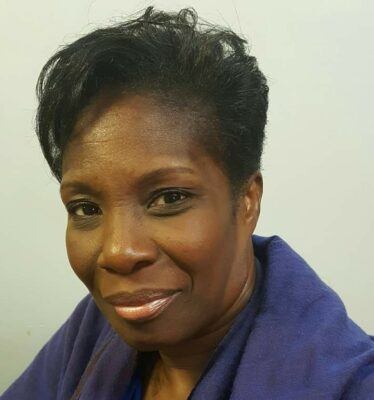
Norine explained,
“My mom sewed, so I fell in love with fabrics. As an immigrant working two jobs, I decided to launch a business of buying and selling children clothing. I used the inspiration of my own children and the experience of being a mom as the setting for my home-based business. We had a baby registry with handmade layettes, bedding, baby accessories and gift sets.”
The business model proved very ambitious and labor became problematic. Her workforce of women who sewed for her also had to work outside of the home and could not continue to work independently for her. She also struggled with another factor,
“The cost of materials was increasing because I was purchasing in small lots and so I decided to focus on crochet, and by order. We created samples so we could create a website and share our work on a larger scale. I then found myself downsized during the mortgage crisis in 2007. I was caring for two young children without any help. My business sat dormant for many years.”
It wasn’t until her youngest son became a senior in high school, that she decided to try again and resurrected the business.
“I learned of the Brooklyn Fashion Incubator in January 2016 and was shocked when the Founder, Maria Barraza, gave me an opportunity to participate in the program. I only had a set of patterns and a sample when I sat with her. Then everything changed.”
The incubator is a nonprofit that mentors young businesses seeking to succeed in the U.S. Fashion Market. They empower a wide and diverse range of entrepreneurs, largely minorities, from New York and as far reaching as Chicago, Philadelphia and Cambridge.
Networking with the other participants, Norine learned insider tips for best practices in the fashion industry.
“It was awesome!”
The opportunity to sell at curated events allowed her to not only prepare for pop up shops, but taught her to sell with confidence. Her decor collection, imported from a female entrepreneur in Amsterdam, offers the benefit of being eco-friendly. By shifting to a model in which her artisans create upon order, production became cost effective.
I asked Norine for her advice for budding entrepreneurs.
“Let your passion lead and you will never be disappointed. I had so many reasons to give up, it was extremely difficult. Having the right support is crucial in launching a business.”
Understanding the Decision of Becoming an Entrepreneur…
In order to better understand why so many women are seeking to become entrepreneurs, I spoke with Marcela Berland from Latin Insights, a consulting firm that specializes in reporting on diversity and inclusion issues as a means to empower change.
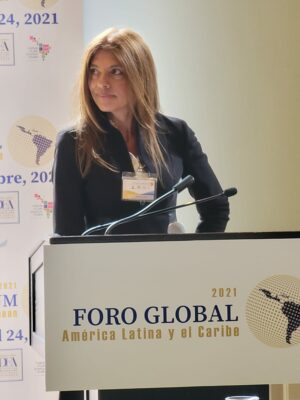
Berland stated,
“If you look at Fortune 500 CEOs, we have for the first time a record 41 female CEOs among Fortune 500 companies.” But this includes only two African-American women and no Latinas.”
When compared to men, Berland stated that,
“The gender gap in pay has remained relatively consistent in the US over the past 15 years or so. In 2020, women earned 84% of what men did. Based on this estimate, it would take an extra 42 days of work for women to earn what men did in 2020. This effect on women’s potential earnings cap also can have an impact on their confidence level. And, minority women suffer double discrimination at work, and therefore are more affected in terms of salary discrepancy and promotion opportunities.”
No wonder more women are seeking professional refuge by creating their own business.
Empowering and Rewarding!
A profound example of this trend is Keisha Greaves. She is the Founder and CEO of a fashion brand called “Girls Chronically Rock,” based out of Cambridge, Massachusetts. This dynamic young lady has pushed past all boundaries by launching her business in the midst of being diagnosed with Muscular Dystrophy in 2010.
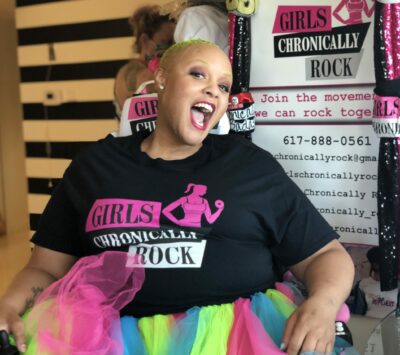
Keisha shared with me,
“I always had a passion for fashion and I know I always wanted to be a business owner and fashion designer.”
She was attending graduate school at the time and receiving her MBA. With graduation on the immediate horizon, she fell ill. But her determined journey helped inspire her line.
“Growing up, I looked up to fashion designers, such as: Tommy Hilfiger, Betsey Johnson and Kimora Lee Simmons from her Baby Phat stage. After being diagnosed, I wanted to create a t-shirt line to help inspire and motivate others in the disability community with inspirational quotes meaningful to me and my journey living with Muscular Dystrophy.”
In Keisha’s case she tackled the difficulties of learning how to start a business and run it by herself while dealing with the painful physical and emotional issues of this debilitating illness. She too found help from The Brooklyn Fashion Incubator but also through the Boston Business Women. The organization’s mission is to spark the success of Boston’s best female business leaders and entrepreneurs.
“That’s how I got connected to other business individuals, and even my public relations person and my business coach. It sparked collaborations with other amazing people.”
She also embraced and owned her disability using hashtags as part of her branding. Through social networks she added key messages like: #musculardystrophy, #entrepreneurship, #disabledcreative, #disabledbusinessowner. It contributed to her making connections and building brand awareness. She was even featured on ABC Chronicle, Good Morning America, and the Today Show newsletter.
“Those accomplishments made me feel more empowered, motivated, and made me feel like I can do anything. Of course, the challenge is not making the volume of sales I would like, and growing the revenue I need.”
Keisha’s determination and upbeat ‘can-do’ persona is inspirational and when I asked her for advice for budding entrepreneurs, she didn’t hesitate to state,
“If you have an idea or a dream, JUST GO FOR IT. You can accomplish anything you put your mind to! Remember to always network, go to certain events, walk with a business card, and join different business groups. That will definitely help you along the way.”
Collaboration Woven Within
Mentorship is inherent to the collaborative way women work. And, there are many organization’s and even local government offices that are a rich resource. I was reminded of the Red Shoe Movement, an organization I had benefited from as I was starting out. Founded by Mariela Dabbah the group specializes in providing resources and professional development to multicultural women. Its mission is to help increase female representation at the highest levels of decision-making in all kinds of businesses and organizations, with a particular mindset for owning what we bring from our cultures and communities.
Threading the Needle
Fashion designer Lola Faturoti is exemplary of this and she joyfully shared her worldly perspective. Lola is the founder of her own successful fashion company “LOLA FATUROTI Loves.”
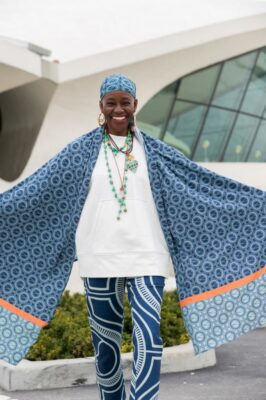
Lola was born and raised in London, England. When she was three years old, her family sent her to Ondo, Nigeria to live with grandmother and learn Yoruba, her country’s official language. When she turned 17, she went back to London to continue her higher education in fashion. She later came to the U.S. to live and work in New York City. It was here, she informed me, she would eventually launch her business.
“My grandmother was a clothing designer, so since I was living with her, I was inspired by watching her doing her work. My mother traveled a lot at the time, and every time she came back to visit me in Nigeria, she brought me new clothing from international designers. Since I was living in an area where most of the kids were running around in their underwear most of the time, my clothing made me feel very special, and I was not afraid to show it!”
Lola took a job as a clerk at Charivari, a popular NY boutique that sold all the well-known designer brands and appealed to celebrities during the 80’s and 90’s. Even here she wasn’t shy of showcasing her own designs. As more and more people asked about her clothing, the store ended up showcasing some of her designs.
Lola admitted that she found that it was very difficult for her to work for someone else. She had a deep desire to find the time to do things her way and at her pace.
“I am a very independent woman, so some people might not be okay with my ways of operating.”
The biggest difficulty she encountered was finding a good business partner,
“It is very difficult for me to maintain the creative side of the business, and the marketing and sales. That takes a lot of time. So having a business partner that can allow me to be my creative self, would be very helpful.”
Her warm smile turned to a laugh as she added,
“By the way, I am still looking for one, do you know anyone?”
When I asked Lola what resources she used to start her business, she replied,
“My money! I saved all of it for the business so I could finance all the creative work.
The Color Green
Lola’s experience in self-financing her business is typical of most women entrepreneurs. The Senate Small Business & Entrepreneurship Committee reports that female business owners account for less than 5 percent of all the capital lent to small companies and only 7 percent of all capital funded by venture firms. However, Lola and others are finding alternative resources. For example, during the Blacks Lives Matter demonstrations, a company called Resonance, invited for the first time, African-American designers to an annual competition that provides designers with textile printing. Lola entered and was one of the winners that year. She also mentioned how much she appreciates the company’s efforts on sustainability, adding that,
“They only print on demand. They use only organic materials. In addition, they manage to use very little water resources since they collect water from the rain to avoid waste. They are super sustainable and amazing!”
Lola described to me that the most rewarding part of her business is to bring happiness to others with her designs. It is even something she articulated in the business’ mission. Her brand blends her African roots with an international and contemporary vision that, as she puts it:
“Can dress your soul!”
I asked Lola for her inspirational offering and she quoted one of her literary heroines, Maya Agelou,
“You can only become truly accomplished at something you love. Don’t make money your goal. Instead pursue the things you love doing and then do them so well that people can’t take their eyes off of you.”
Like Lola’s designs, her undeniable radiance reminded me once again how color brings beauty to our lives. Lessons demonstrated by Keisha’s determination to push beyond adversity combined with Norine’s persistence of vision were credos to take to heart.
Even Berland offered a positive note in her research,
“I think there are tremendous opportunities for women. There is more awareness about our struggles and what needs to be done to assist them. Corporate America is taking note of our critical contributions. Those who commit to action, will see tremendous benefits since it has been proven that a diverse workforce increases profits and attracts a broad consumer base critical to the growth of any company.”
Words to Motive By
As we prep for that job interview, put the final dressing on our business financing plan, lean into the conversation at board meetings, or even ready our daughters for National Take Your Daughter and Sons to Work Day, let’s be confident that the vibrancy and intelligence we bring is the best look for us everyday.