
Part I. Blending Jazz and Classical Music: Schuller, Davis, and MJQ
When we think of jazz, images of lively improvisations in intimate clubs often come to mind. However, the Modern Jazz Quartet (MJQ) redefined this perception by introducing a refined blend of jazz and classical music, a fusion that became known as Third Stream. Central to this movement was their collaboration with composer, conductor, and French horn virtuoso Gunther Schuller.
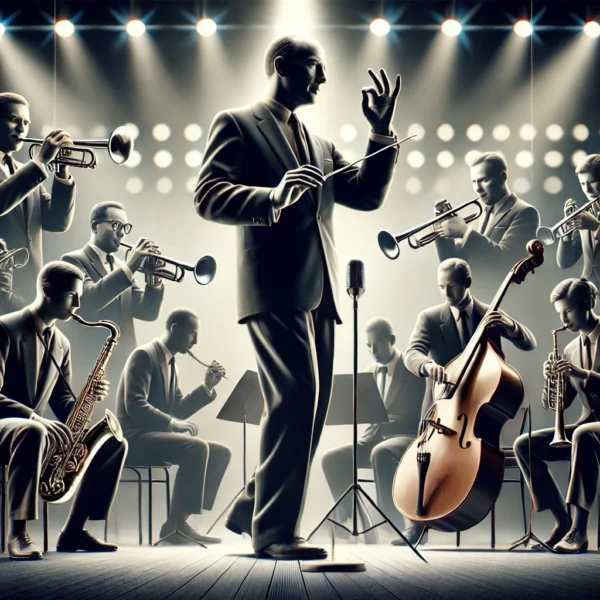
Gunther Schuller: A Musical Prodigy
Born on November 22, 1925, in Queens, New York, Schuller’s immersion in music was almost inevitable. His father, Arthur E. Schuller, was a violinist with the New York Philharmonic, nurturing young Gunther’s musical curiosity. By age 15, Schuller was performing professionally with the American Ballet Theatre. His prodigious talent led him to principal positions with the Cincinnati Symphony Orchestra (1943–45) and the Metropolitan Opera Orchestra (1945–59).
Despite his classical pedigree, Schuller’s passion extended far beyond the concert hall. In the late 1940s and early 1950s, he began collaborating with jazz legends like Miles Davis, Dizzy Gillespie, and John Lewis of MJQ, bridging the worlds of classical and jazz.
The Birth of Third Stream
In 1957, while lecturing at Brandeis University, Schuller coined the term “Third Stream” to describe a genre that merged classical composition with jazz improvisation. Schuller envisioned a musical landscape where the structural complexities of classical music could coexist with the spontaneity of jazz. This idea resonated deeply with MJQ’s pianist and musical director, John Lewis, who also sought to elevate jazz to the concert hall.
Schuller’s concept materialized in groundbreaking performances. That same year, he co-led the “Modern Jazz Concert” at the Brandeis Festival of the Arts, conducting and performing alongside musicians from both classical and jazz backgrounds.
MJQ and Schuller: A Collaborative Synergy
The partnership between MJQ and Schuller was a harmonious blend of shared musical philosophies. Together, they founded the Modern Jazz Society in 1955, which evolved into the Jazz and Classical Music Society. Their goal was to present concerts showcasing this genre fusion, bridging the perceived divide between jazz and classical audiences.
Among their notable collaborations is Schuller’s composition “Transformation” (1957), a piece for jazz ensemble that seamlessly fuses intricate classical motifs with spontaneous jazz solos. Another highlight is “Concertino” (1959), written for jazz quartet and orchestra, embodying the Third Stream ethos through an interplay of structured orchestration and freeform jazz.
Schuller’s Expanding Role in Jazz
Beyond his work with MJQ, Schuller conducted and performed with some of jazz’s biggest names. He played French horn on recordings with Miles Davis’ “Birth of the Cool” sessions, shaping the laid-back, intricate sound that defined the cool jazz movement.
In 1990, Schuller co-founded and conducted the Smithsonian Jazz Masterworks Orchestra, dedicated to preserving and performing classic jazz compositions. Additionally, he championed Charles Mingus’ epic composition “Epitaph,” conducting its landmark performances in the 1980s.
Schuller’s conducting bridged eras and styles, reinforcing his belief that jazz was as rich and complex as classical music.
A Scholar and Advocate
Gunther Schuller’s influence wasn’t limited to performance. His deep academic engagement produced essential writings on jazz history. His books, “Early Jazz: Its Roots and Musical Development” (1968) and “The Swing Era” (1991), remain foundational texts in jazz historiography. His meticulous research and deep respect for the genre helped establish jazz as a subject worthy of scholarly inquiry.
Reviving and Preserving Traditions
As president of the New England Conservatory (1967–1977), Schuller founded the New England Ragtime Ensemble, leading efforts to revive the works of Scott Joplin and reignite interest in ragtime during the 1970s. This initiative not only honored historical roots but also encouraged modern reinterpretations of classic African-American musical traditions.
Lasting Impact and Legacy
Gunther Schuller’s work with MJQ and other jazz legends helped cement Third Stream as a legitimate genre, challenging the notion that jazz and classical music belonged in separate spheres. His dual roles as conductor and performer allowed him to shape music from both sides of the podium.
The Third Stream movement, championed by Schuller and MJQ, enriched the musical landscape of the 20th century, fostering deeper connections between genres and inspiring future artists to explore uncharted musical territory.
| Aspect | Third Stream | Jazz Fusion |
|---|---|---|
| Time Period | 1950s – 1960s | Late 1960s – 1970s |
| Primary Influences | Classical music | Rock, funk, electronic music |
| Key Figures | Gunther Schuller, John Lewis | Miles Davis, Herbie Hancock, Weather Report |
| Sound and Style | Chamber-like, refined | Loud, electric, groove-driven |
| Audience Reception | Intellectual, niche appeal | Mainstream, youthful audiences |
| Criticism | Too academic, lacks swing | Too commercial, dilutes jazz essence |
| Legacy | Classical-jazz hybrid still relevant | Shaped funk, hip hop, and electronic music |
Gunther Schuller’s visionary collaborations with the Modern Jazz Quartet and other jazz luminaries solidified Third Stream as more than a fleeting experiment — it became a testament to the transformative power of genre-blending. As both a conductor and performer, Schuller bridged the worlds of classical refinement and jazz spontaneity, proving that these seemingly disparate styles could coexist and thrive together.
The Third Stream movement, championed by Schuller and MJQ, not only enriched the musical tapestry of the 20th century but also challenged the boundaries of artistic expression, inspiring generations of musicians to experiment and innovate.
As Schuller eloquently put it: “Jazz and classical music are not separate islands. They are two parts of the same river.” His work continues to remind us that the fusion of ideas—like the fusion of music—can open pathways to new artistic horizons, forever expanding the possibilities of sound.
Discover Third Stream in Schuller’s Own Words
“Jazz and classical music are not separate islands. They are two parts of the same river.”
Through his groundbreaking work with the Modern Jazz Quartet and his broader vision for Third Stream, Gunther Schuller bridged worlds that many thought were incompatible. His contributions continue to inspire musicians and audiences alike, proving that music, at its best, knows no boundaries.
For a deeper dive into the world of Third Stream music, we recommend two captivating videos. Watch the Modern Jazz Quartet’s masterful performance of “Third Stream Music” on YouTube to experience the fusion of classical structure with jazz improvisation firsthand. Additionally, explore Schuller’s thoughts on music and his artistic philosophy in the video “Gunther Schuller: Multiple Streams.” Together, these videos offer a richer understanding of the innovation and passion behind this transformative movement.
Introducing the Series: Jazz at the Crossroads of Innovation
Publishing Schedule:
- January 13: Introduction + Part 1
- January 15: Part 2
- January 17: Part 3
In Collaboration with AI