
🪖 African-Americans in Vietnam: Bravery in a Divided America
African-Americans in Vietnam were caught in a dual struggle — fighting for their country abroad while battling discrimination within their own ranks and back home. Their valor on the battlefield stood in stark contrast to the injustice they faced daily. Yet through courage, resilience, and sacrifice, Black soldiers helped shape both the course of the Vietnam War and the civil rights movement.
Week 4: The Civil Rights Era, Vietnam, & Modern Leadership
🟣 Fighting Two Wars: Racism and the Viet Cong
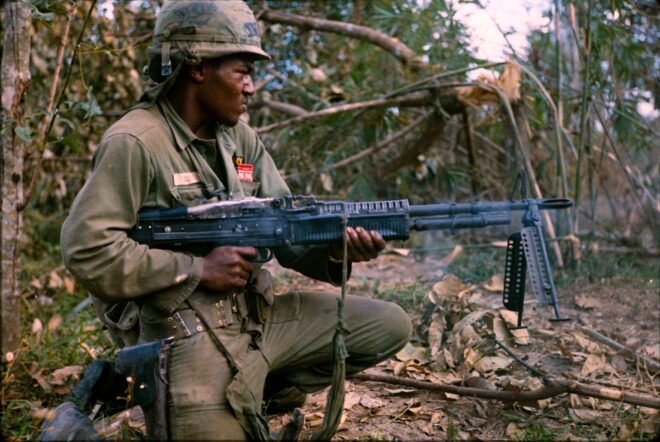
By the late 1960s, African Americans made up nearly 12% of the U.S. population, yet they represented over 20% of combat troops in Vietnam. Drawn disproportionately through the draft system and systemic inequality, many young Black men found themselves on the front lines of the most controversial war in American history.
Inside the military, they faced the same segregationist attitudes they knew from civilian life. Promotions were rare, command positions even rarer. The lack of African-American officers led to tension and mistrust between Black enlisted men and the predominantly white officer corps.
Still, Black soldiers served with extraordinary bravery. Units like the 9th Infantry Division, 101st Airborne, and 1st Cavalry Division counted hundreds of African-American soldiers among their most reliable and fearless fighters.
🟣 Brothers in Arms and Protest in Uniform
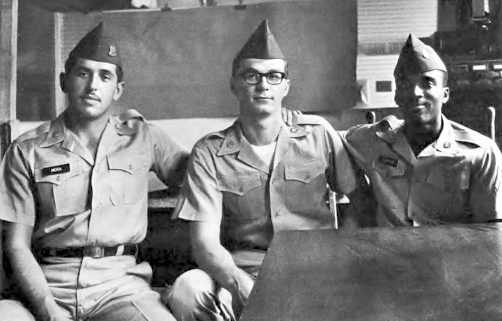
As the Civil Rights Movement intensified stateside, it reverberated across the Pacific. Many Black soldiers took pride in their service but were increasingly vocal about discrimination both within the military and at home. The iconic raised fist salute began appearing in barracks photos and even in combat zones.
Some staged nonviolent protests on base, demanding equal treatment. Others, like Milton Olive III, who posthumously received the Medal of Honor after sacrificing himself on a grenade to save fellow soldiers, became symbols of courage that transcended race.
🟣 Returning to a Divided Home
When Black veterans returned from Vietnam, they encountered a nation still deeply divided. Unlike the celebrated WWII heroes, Vietnam veterans — Black and white alike — were often met with indifference or outright hostility. For African-American veterans, the sting was compounded by the continued reality of housing discrimination, employment barriers, and police brutality.
Yet many brought their discipline and determination into activism. Veterans became foot soldiers in the ongoing Civil Rights and Black Power movements, demanding the equality they had risked their lives for overseas.
“We fought for a country that didn’t fully fight for us,” said Vietnam veteran and activist Chuck Hagel. “Yet we fought anyway — and we came back demanding to be seen.”
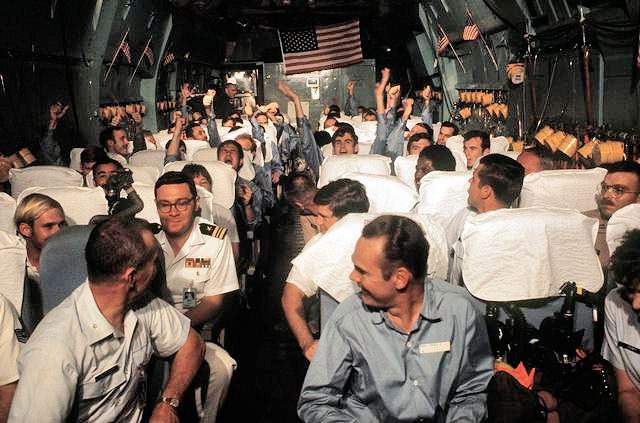
Few, if any, African-American soldiers appear in official return photographs,
despite their significant presence in combat.
🟣 Legacy and Recognition
Today, memorials like the Vietnam Veterans Memorial in Washington, D.C., and the growing inclusion of Black voices in Vietnam histories have begun to correct the narrative. Yet, even in remembrance, certain absences remain.
One of the most striking images from the era is the 1973 photograph of returning American POWs, newly released from North Vietnamese prison camps. In this widely circulated photo, the overwhelming majority of the returnees are white soldiers. For many Black veterans, this absence was not surprising. Despite their disproportionate presence on the front lines, few African-American soldiers appeared in these celebrated homecomings.
The irony was unmistakable to those who had lived it: highly visible in battle, but nearly invisible in the national memory of the war’s end. For Black veterans, valor was often followed by invisibility.
“We fought for a country that didn’t fully fight for us,” said Vietnam veteran and activist Chuck Hagel. “Yet we fought anyway — and we came back demanding to be seen.”
Their bravery, too long underrecognized, is now part of the broader story being reclaimed — one marked by courage, sacrifice, and the demand to be remembered.
#AfricanAmericanValorSeries #VietnamWar #BlackVeterans #CivilRights #BlackHistory #RoutesMagazine