
Harriet Tubman: The Soldier, Spy, and Hero of the Combahee River Raid
Harriet Tubman, celebrated for leading hundreds to freedom through the Underground Railroad, also made history as a fearless soldier and spy. Her leadership in the Combahee River Raid marks one of the boldest military operations by a woman in U.S. history — and the only one led by a Black woman during the Civil War.
Week 1: Breaking Barriers in the 19th & Early 20th Century
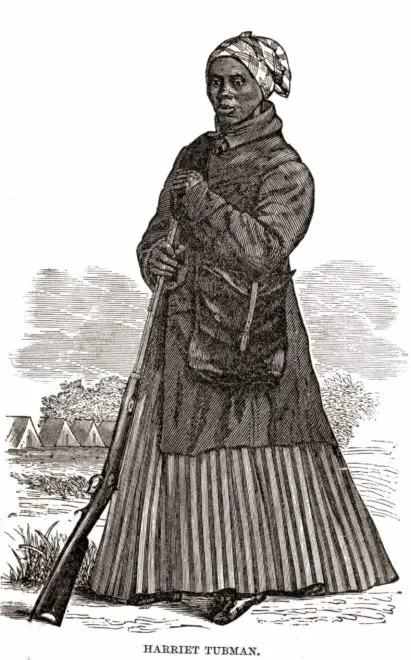
Harriet Tubman is widely celebrated as the fearless leader of the Underground Railroad, but her contributions to American history extend far beyond leading enslaved people to freedom. During the Civil War (1861–1865), Tubman took on three critical roles:
- A spy for the Union Army—gathering intelligence behind Confederate lines.
- A nurse and cook—tending to Black soldiers and freedmen in Union camps.
- A military leader—orchestrating the daring Combahee River Raid, which freed over 700 enslaved people in South Carolina.
Her direct involvement in military strategy made her the first woman in U.S. history to lead an armed expedition, solidifying her place as one of the most influential figures of the Civil War.
Tubman as a Union Spy: Intelligence Behind Enemy Lines
In 1862, Tubman was recruited by the Union Army to serve as a spy and scout in the Deep South. Her knowledge of the Southern terrain and her ability to blend in with enslaved populations made her an invaluable asset.
- Gathering Intelligence: Tubman used her network of informants to track Confederate troop movements, supply routes, and defenses.
- Posing as a Slave: To gain critical information, she disguised herself as an enslaved woman working in Confederate territory.
- Reporting to Union Officers: Tubman relayed her findings to General David Hunter, commander of Union forces in the South.
Her intelligence-gathering efforts helped shape Union strategies in the region, particularly in South Carolina, where she later led a major operation.
A Nurse and Caregiver: Healing Black Soldiers and Freed Slaves
While spying was crucial, Tubman also played a vital humanitarian role in the war. She served as a nurse and cook, treating wounded Black soldiers and newly freed enslaved people in Union camps.
- Medicinal Knowledge: Tubman relied on traditional herbal remedies to treat dysentery, smallpox, and infections.
- Caring for the Sick: Black soldiers and freedmen in Union camps were often neglected by white medical staff. Tubman ensured they received proper care.
- Advocating for Resources: She urged Union officers to provide better supplies and living conditions for Black troops.
Her dedication to the sick and wounded mirrored her lifelong mission—helping African-Americans survive and thrive despite oppressive conditions.
The Combahee River Raid: Leading an Armed Expedition
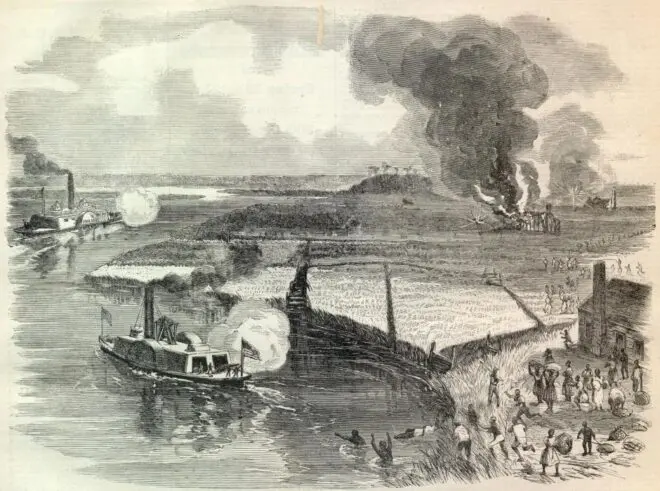
The night of June 1-2, 1863, marked Harriet Tubman’s greatest military achievement—the Combahee River Raid. With the support of Union officers, she led an armed river assault deep into Confederate territory, freeing over 700 enslaved people from rice plantations along the Combahee River in South Carolina.
The Strategy
- Tubman worked closely with Colonel James Montgomery of the Union Army’s Second South Carolina Volunteers, an all-Black regiment.
- Using her intelligence network, she mapped out the Confederate defenses and identified plantations with the most enslaved people.
- She guided three Union gunboats along the river, using her knowledge of local waterways to avoid torpedoes and traps.
The Execution
- As the Union troops stormed the riverbanks, Tubman led the charge, directing soldiers to burn down plantations and disrupt Confederate supply lines.
- Hundreds of enslaved people, recognizing Tubman from the Underground Railroad, rushed toward the boats.
- Many were hesitant at first, fearing retribution if the Union lost the war, but Tubman convinced them to seize their freedom.
- Over 700 enslaved men, women, and children boarded the Union vessels, escaping to safety.
The Aftermath & Impact
- The raid crippled Confederate plantation economies along the Combahee River.
- It provided hundreds of new recruits for the Union’s all-Black regiments.
- Tubman’s success in planning and executing the raid shattered gender and racial barriers, proving that a Black woman could lead in war.
For her role, Tubman was never paid her promised military pension, a bitter injustice that took decades to rectify. She would later receive only a widow’s pension after marrying a Union veteran.
Legacy: Tubman’s Military Service in Perspective
Harriet Tubman’s contributions to the Civil War were nothing short of revolutionary.
- She was one of the few women in history to lead a military operation.
- She freed more people in a single night than she did in years on the Underground Railroad.
- Her work as a spy, nurse, and military strategist proved that African-Americans were crucial to the Union victory.
In 2003, the U.S. Army honored her legacy by inducting her into the Military Intelligence Corps Hall of Fame—a long-overdue recognition of her tactical brilliance and courage.
Conclusion: Why Her Story Matters Today
Harriet Tubman’s Combahee River Raid and her broader role in the Civil War challenge traditional narratives of women and African-Americans in military history. As debates over diversity and recognition in the armed forces continue, Tubman’s legacy is a reminder that Black soldiers, Black intelligence operatives, and Black women have always played a pivotal role in defending America.
For far too long, Tubman’s military genius and heroism were overlooked in mainstream history. Today, we honor her not just as a conductor on the Underground Railroad, but as a soldier, strategist, and liberator. Her leadership in battle places her among the most remarkable military figures in American history—a legacy that deserves the highest recognition, in every form.
WATCH: Harriet Tubman: They called her Moses (2018) | Full Movie | Dr. Eric Lewis Williams
AfricanAmericanValorSeries #RoutesMagazine #BlackMilitaryHistory #MilitaryHeroes #WWI #WWII #CivilRights #BlackExcellence #USMilitaryHistory #UntoldStories #BlackHistory365