
Part 2. — How the Modern Jazz Quartet Blended Jazz and Classical Music to Create Something Timeless
Let’s face it — when most people think of jazz, they picture smoky clubs, wild improvisation, and the kind of energy that feels almost chaotic. But the Modern Jazz Quartet (MJQ)? They were something else entirely. Picture four musicians in sharp suits, performing with the elegance and precision you’d expect from a string quartet. Their music wasn’t just cool — it was refined, intentional, and, in many ways, revolutionary.
What made Modern Jazz Quartet (MJQ) stand out wasn’t just their style (though they were undoubtedly stylish); it was the way they blended jazz and classical music so seamlessly that it felt natural — like the two genres had always belonged together. This unique synthesis was part of a movement called Third Stream, and MJQ didn’t just participate in it — they helped define it.
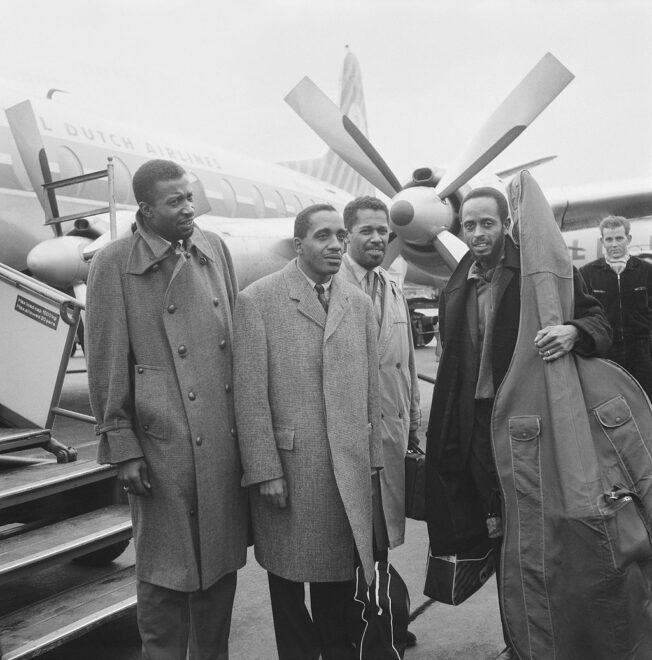
Harry Pot, CC BY 4.0 <https://creativecommons.org/licenses/by/4.0>, via Wikimedia Commons
A Different Kind of Jazz Quartet
MJQ wasn’t born in the back of a nightclub. Sure, they came up in the bebop scene, but early on, pianist John Lewis had a bigger vision. He didn’t just want to play fast, complex solos — he wanted to compose, to arrange, to bring the structure and finesse of classical music into the unpredictable world of jazz.
Lewis found the perfect partners in vibraphonist Milt Jackson, bassist Percy Heath, and drummer Connie Kay (following the original drummer, Kenny Clarke). Together, they weren’t just playing music — they were crafting experiences.
And it wasn’t just Lewis’s idea. Enter Gunther Schuller, a classically trained composer who also happened to love jazz. Schuller saw the potential for these two worlds to collide in a way that could elevate both genres. He and Lewis became fast friends, and the rest is history — or at least, a fascinating chapter of it.
Third Stream – Where Jazz Meets Classical
Now, you might be wondering — what exactly is Third Stream? Think of it like this: if jazz and classical music had a baby, that baby would be Third Stream. It’s not quite jazz, not quite classical, but something that lives beautifully in between.
Schuller coined the term in the late 1950s, but Modern Jazz Quartet (MJQ) had already been living it for years. Their music was full of counterpoint, fugue-like structures, and carefully composed sections that felt like they could belong in a symphony hall. At the same time, they left space for solos and improvisation — because what’s jazz without a little room to breathe?
One of the best examples of this is “Vendome,” a piece that Lewis wrote in 1952. If you close your eyes and listen, you’ll hear echoes of Bach — but just as you’re settling into that classical groove, Jackson’s vibraphone swoops in with a bluesy, improvisational flair. It’s like watching someone in a tuxedo break out into a smooth dance move — unexpected, but undeniably cool.
When Jazz Walked into the Concert Hall
Modern Jazz Quartet (MJQ) didn’t just bring classical techniques into their music — they brought jazz into classical spaces. In 1960, they took things to the next level by performing with the Stuttgart Chamber Orchestra. Imagine that: a jazz quartet sharing the stage with a classical ensemble, performing pieces that felt equally at home in both worlds.
It wasn’t a gimmick. MJQ’s performance with the orchestra felt natural, almost like they’d been doing it for years. Pieces like “Concorde” and “Fugato” were designed to blend jazz improvisation with classical forms, and the audience could feel that magic in the air. It was one of those moments where you realize that music doesn’t need to be confined by genre — it just needs to be good.
Gunther Schuller’s Influence – “Three Little Feelings”
One of the most direct collaborations between MJQ and classical composers was “Three Little Feelings” by Schuller. Written specifically for the quartet, this piece feels like a conversation between classical and jazz elements. There are moments of tight, structured ensemble playing that suddenly open into vibraphone solos, swinging gently but confidently back into the fold.
Schuller didn’t just write for MJQ — he wrote with them in mind. He knew how Jackson’s vibraphone could shimmer over Lewis’s piano, how Heath’s bass could hold everything together, and how Kay’s drums could dance delicately around it all. It was a piece that respected both traditions, and it became one of the earliest shining examples of Third Stream in action.
Bach, Baroque, and the Blues
One of the coolest things about John Lewis was how much he adored J.S. Bach. If you’ve ever listened to Bach’s fugues, you know how structured and intricate they can be. Lewis took that structure and brought it straight into MJQ’s music, but he never let it feel rigid. Instead, he let the improvisational heart of jazz add warmth to those tight arrangements.
Take “Fugato,” for instance. The piece begins with a classical fugue — each instrument weaving around the others — but by the halfway point, it breaks into a full-blown jazz swing. It’s as if Bach himself wandered into a Harlem jazz club and decided to stay for a drink.
The Modern Jazz Quartet (MJQ) Breaking Down Barriers
Here’s the thing — MJQ’s approach wasn’t universally loved. Some jazz purists thought they were too stiff, too academic. On the flip side, classical audiences sometimes struggled with the looser, improvisational elements. But that’s the risk you take when you’re breaking down barriers.
And let’s be honest — MJQ didn’t care. They knew they were onto something special, and so did their fans. By the late 1950s, MJQ wasn’t just playing jazz clubs anymore — they were performing in concert halls across Europe and the U.S., bringing jazz to audiences who might never have experienced it otherwise.
A Lasting Legacy
So why does all of this matter today? Because the Modern Jazz Quartet didn’t just blend jazz and classical music — they changed how people thought about both genres. They showed us that jazz could be elegant, that classical music could swing, and that great music doesn’t need to fit into a neat little box.
Their influence lives on in artists like Wynton Marsalis and ensembles like the Kronos Quartet, who continue to push the boundaries between genres. And every time you hear a jazz musician play with an orchestra or a classical composer write a piece with improvisational sections, you can bet MJQ’s fingerprints are somewhere in the mix.
The Modern Jazz Quartet wasn’t just making music — they were making history, one note at a time. And if you haven’t taken the time to sit down and really listen to their work, now’s the perfect moment. Pour yourself a drink, put on “Django” or “Vendome,” and let the music remind you that jazz, at its best, can go anywhere — and take you right along with it.
While the Modern Jazz Quartet refined Third Stream through their performances, Miles Davis was exploring a different fusion of jazz — one driven by electric instruments and rock influences.
In Part 3, we’ll shift focus to Davis and Schuller’s shared early collaborations and how their artistic paths diverged, giving rise to jazz fusion.
In collaboration with AI research tools.