
Paul Laurence Dunbar — the caged birds sing “Happy Birthday”

Paul Laurence Dunbar was a prominent African-American poet, novelist and short story writer who rose to fame in the late 19th and early 20th centuries. He was born in Dayton, Ohio to parents who had been enslaved in Kentucky before American Civil War. As a result, his upbringing was marked by hardship and struggle.
But despite those challenges, Paul Laurence Dunbar displayed remarkable talent for writing at a early age. At the tender age of 16, his literary career began gaining momentum with the publication of his first poems in a local Dayton newspaper. These early works were well received by readers and critics alike. At the same time, earning him recognition as a gifted young poet with immense potential.
In addition to his writing talents, Dunbar also served as president of his high school’s literary society. Further demonstrating his commitment to the craft of storytelling.
Perhaps, Paul Laurence Dunbar’s most famous poem is “Sympathy.” Its opening line — “I know why the caged bird sings” — still ringing true today. This powerful poem, explores themes of oppression, freedom and resilience through this metaphor of a caged bird yearning for liberation. By drawing parallels between the bird’s plight and the struggles faced by African-Americans in society, Paul Laurence Dunbar sheds light on the enduring legacy of slavery and discrimination.
Paul Laurence Dunbar knows why the caged bird sings
In “Sympathy” Dunbar employs vivid imagery and evocative language. This conveys the emotional depth of his subject matter. Its haunting refrain captures a sense of longing and confinement that pervades a bird’s existence. The concluding lines offer poignant reflection on the enduring spirit of hope. Consequently sustaining even in times of adversity. Through this masterful work, Dunbar invites readers to contemplate the larger questions about freedom justice and human dignity.
Some of Paul Laurence Dunbar’s notable books include “Lyrics of Lowly Life” “Majors and Minors” and “The Heart of Happy Hollow.” These works showcase his mastery of dialect poetry. It’s notable, his ability to capture human experience with emotional depth, nuance, lyrical beauty, social commentary likewise the exploration of race relations in America.
WE WEAR THE MASK
We wear the mask that grins and lies,
It hides our cheeks and shades our eyes, -‐-‐
This debt we pay with human guile;
With torn and bleeding hearts we smile,
And mouth with myriad subtleties.
Why should the world be over-‐wise,
In counting all our tears and sighs?
Nay, let them only see us, while
We wear the mask.
We smile, but, O great Christ, our cries
To thee from tortured souls arise.
We sing, but oh the clay is vile
Beneath our feet, and long the mile;
But let the world dream otherwise,
We wear the mask!
—Paul Laurence Dunbar
Paul Laurence Dunbar’s “We Wear the Mask”
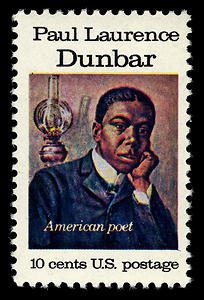
One of the most famous poems from Paul Laurence Dunbar’s collection is “We Wear the Mask”. Here, he delves into the concept of hiding one’s true feelings behind a façade. The opening lines of this poem are particularly striking: “We wear the mask that grins and lies, It hides our cheeks and shades our eyes”. This poem brings to mind, the oft seen in film and on television, the comedic-debasing performances by African-American actors — Hattie McDaniel, Bill ” Bojangles ” Robinson and Steppin’ Fletchet, to name a few.
Paul Laurence Dunbar’s numerous challenges and literary pursuits
Despite facing numerous challenges as an African-American writer during a time of widespread racial prejudice, Paul Laurence Dunbar persevered. His literary pursuits were marked with courage and determination. His groundbreaking work has paved a way for future generations of black writers. Enabling writers voices to be shared with the world — challenging prevailing race and identity stereotypes.
Paul Laurence Dunbar is an established figure in American literature. His contributions through his poetry, novels and short stories offer profound insights into the extant complexities of race relations in the United States of America. He celebrated the resilience and creativity of African-Americans. (June 27, 1872 – February 9, 1906)