
The First to Fall: Crispus Attucks and the Echos of History
Founding Martyr of African-American Military Valor
Prologue to the African-American Valor Series
Before the Buffalo Soldiers rode west or the Tuskegee Airmen soared into battle, one man stood at the edge of revolution and gave his life for the promise of a freer nation. That man was Crispus Attucks, a Black and Native American dockworker who became the first to fall in the Boston Massacre of 1770. His death marked not only the beginning of the American Revolution but also the unacknowledged start of African-American military valor. This series begins with him — a symbol of both resistance and commitment to a country that had not yet committed to him.
A Man of Two Worlds
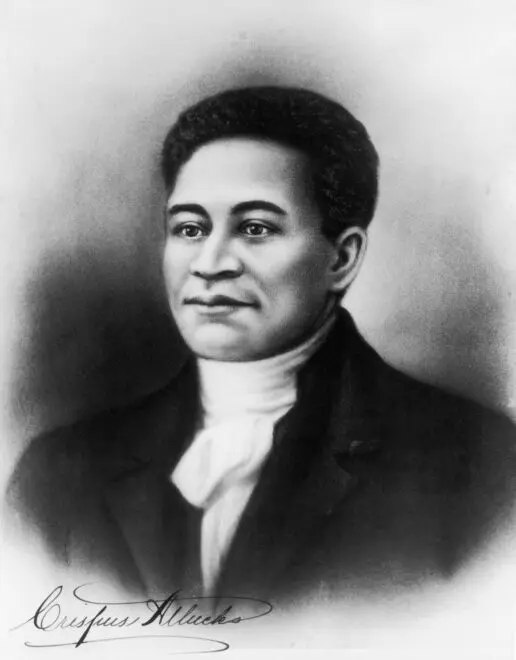
Crispus Attucks was born into a world that rendered him invisible. He is believed to have been of both African and Native American descent, possibly a descendant of the Natick or Wampanoag tribes of Massachusetts. Enslaved early in life, Attucks escaped bondage and lived as a free man — a sailor, a dockworker, a man always on the move.
He was part of a working-class group known as “wharf men,” living on the margins of Boston society, a space shared by the poor, the foreign-born, and the dispossessed. But when tensions between the British military and American colonists escalated in the streets of Boston, Attucks moved to the center of history.
The Boston Massacre: March 5, 1770
On that fateful day, British soldiers opened fire on a crowd of colonists during a confrontation in front of the Customs House. Attucks was the first to fall — struck by two bullets in the chest. Though he carried no weapon, he stood at the front of the protest. His body would become the first martyr of the American Revolution.
Witnesses claimed that he was a leader of the crowd. Others noted that his imposing presence, perhaps his confidence in standing up to power, drew immediate attention. In death, he became a symbol — a figure of defiance and ultimate sacrifice.
Forgotten, Then Found: His Role in Black History
For nearly a century, Attucks was largely forgotten by mainstream history. But in the 19th century, abolitionists resurrected his memory to remind the nation that African Americans had always been present — not only in its foundations but in its bloodshed. Figures like Frederick Douglass and William Cooper Nell lifted Attucks into national memory, using his story to argue for the citizenship, patriotism, and humanity of Black Americans.
He became a rallying point during the Civil War and later the Civil Rights Movement. His name was invoked in speeches, printed on banners, and even referenced in the struggle for voting rights and military inclusion.
A Legacy That Lives On
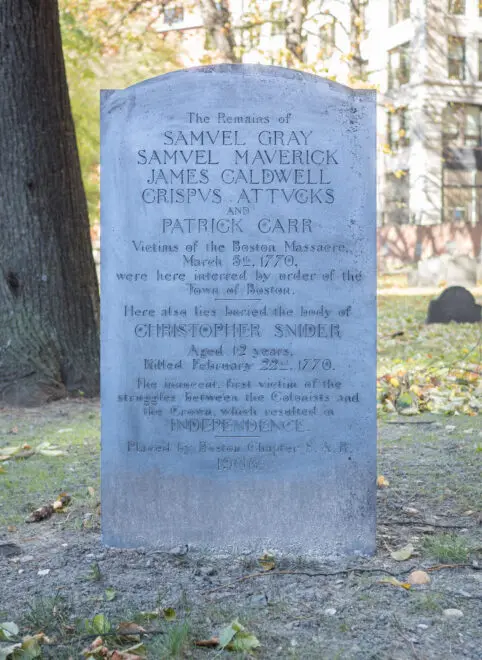
Crispus Attucks reminds us that valor isn’t always defined by uniforms or medals. It is also found in moments of moral courage — in the decision to stand and speak when others fall silent. He was not a general, not a politician, not a statesman. But his sacrifice ignited the flame of revolution and echoed forward into every battle where African Americans would fight for a country that struggled to see them.
His story is the foundation stone of this Valor Series — not as a footnote, but as a founding chapter in a long and unfinished story of African-American service, sacrifice, and leadership.
Series Preview
Following this prologue, the African-American Valor Series continues with stories of heroism and resistance from:
Lt. Henry O. Flipper, the first Black West Point graduate
Harriet Tubman, military scout and freedom fighter
The Buffalo Soldiers
The Tuskegee Airmen
General Colin Powell
and many more, including contemporary leaders reshaping the U.S. military.
🕊️The First to Fall — Crispus Attucks and the Birth of a Pattern
In 1770, Crispus Attucks became the first person killed in the Boston Massacre—and the first to die in the American Revolution. Yet even in death, he wasn’t granted full dignity.
During the trial of the British soldiers, John Adams—the future second president of the United States and defense attorney for the troops—portrayed Attucks not as a hero, but as a menace. He argued:
“This Attucks… appears to have undertaken to be the hero of the night… with a large cord-wood stick. He had hardiness enough to fall in upon them, and with one hand took hold of a bayonet, and with the other knocked the man down.”
Adams’ words served a purpose: to justify violence by criminalizing the victim. It was a narrative strategy America would return to again and again.
Over two centuries later, the Central Park Five, five Black and Latino teenagers falsely accused of a violent crime, were vilified in the press before they had a chance to speak. Just like Attucks, they were cast as dangerous before the facts were known. Just like Attucks, their humanity was pushed aside to protect a preferred story.
History doesn’t just repeat—it rhymes.
From Martyr to Memory
Despite Adams’ characterization, Attucks’ legacy endured. Abolitionists in the 19th century elevated him as a patriotic martyr. In the early 20th century, Black communities celebrated Crispus Attucks Day to honor his sacrifice. And in 1888, a monument was erected in Boston, naming Attucks first among the fallen.
He never lived to see the freedoms he died for—but his memory became part of the long arc toward justice.
Conclusion: The Price of Freedom, Then and Now
Crispus Attucks died at the very dawn of a nation—but his story still echoes through our time. That a man of African and Indigenous descent was the first to shed blood for American independence is no footnote—it’s a foundation.
And yet, the way John Adams portrayed him—as unruly, violent, deserving—mirrors how Black victims have been treated across centuries. From Crispus Attucks to the Central Park Five, to the many names we remember today, we see a haunting pattern: those who challenge power are often painted as threats to justify injustice.
Attucks’ life and death ask us a deeper question: What kind of freedom are we building, and who gets to belong to it?
His name deserves more than a mention in history—it deserves reflection, respect, and recognition. Because freedom, in its truest form, includes the courage to tell the full story.
🧱 “The First Man Killed: From History to Hollywood”
Crispus Attucks was the first man killed in the Boston Massacre—seen by some as the first casualty of the American Revolution. But there’s a haunting echo in pop culture: the first character to die in many horror and action films is often Black.
It’s so common, it became a joke—but one rooted in truth. Whether it’s Aliens, Scream 2, Deep Blue Sea, Predator, or Final Destination, the pattern persists: Black characters are expendable.
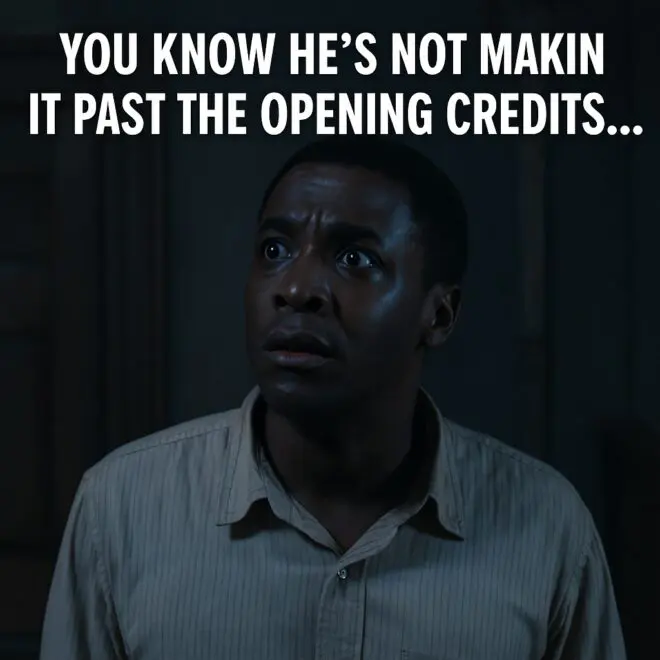
This trope isn’t harmless. It mirrors real-life histories of erasure, scapegoating, and exclusion. From colonial courtrooms to movie scripts, the message has often been the same: Black bodies fall first.
So the next time you’re watching a thriller and the Black character doesn’t make it to the second act, remember—this isn’t new.
It’s an echo of a legacy we’re still rewriting.
BRILLIANT!!! By recapping the accomplishments of unsung African American Heroes and Sheroes starting with the Crispus Attucks, the first man to die in the Revolutionary War, you are highlighting citizens in service both past and present. This is particularly important and potent today when the current Trump administration is erasing the valor and victories of nonwhite Americans throughout the ages..
Comments on “The First To Fall” : Adams words “…IS a narrative strategy America RETURNS to again and again.” That shouldn’t be past-tense, it’s very CURRENT. Also there were EIGHT young African-American and Latino youths charged in the CENTRAL PARK JOGGER CASE. FIVE served years in prison, while three were exonerated. Alton Maddox volunteered to defend all eight pro bono, but because he had been villified by the press duting the Tawanna Brawley rape case, only one of the eight hired Maddox for his defense. He was found acquitted of all charges as were two other accused.
Comments on “The First To Fall” : Adams words “…IS a narrative strategy America RETURNS to again and again.” That shouldn’t be past-tense, it’s very CURRENT. Also there were EIGHT young African-American and Latino youths charged in the CENTRAL PARK JOGGER CASE. FIVE served years in prison, while three were exonerated. Alton Maddox volunteered to defend all eight pro bono, but because he had been villified by the press duting the Tawanna Brawley rape case, only one of the eight hired Maddox for his defense. He was found acquitted of all charges as were two other accused.