
🪖 NATO & African-American Soldiers in WWII: European Perspectives
When African-American soldiers landed in Europe during World War II, they were fighting not only fascism abroad but racism within their own ranks. Yet, many found themselves unexpectedly welcomed by European civilians who saw them not through the lens of American segregation, but as liberators. These interactions left a lasting impression — on both sides — and quietly influenced the post-war formation of NATO and the integration of U.S. forces abroad.
🟣 Fighting Prejudice at Home, Valor Abroad
Over one million African Americans served during World War II, most within segregated units. Whether assigned to the Red Ball Express, the 761st Tank Battalion, or the 332nd Fighter Group (Tuskegee Airmen), Black soldiers were vital to the Allied victory. Yet, they often faced open discrimination from their own military.
On European soil, however, the dynamic changed. French, Belgian, Netherlands and even German civilians often welcomed them as equals — treating them as soldiers, not as second-class citizens. Children were gifted chocolate, villagers invited them to homes and cafes, and communities celebrated their courage.
“We did not see color,” said a French woman decades later. “We saw our liberators.”
🟣 The Crossroads: The U.S. Military Meets Europe
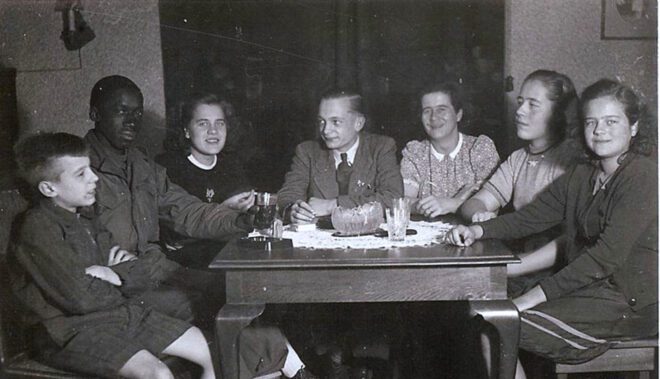
This quiet but profound shift did not go unnoticed by Black soldiers. Many expressed surprise at the lack of segregationist behavior among European civilians. Some described Europe as the first place they felt “fully human” while in uniform.
Ironically, it was often American Military Police (MPs) who tried to enforce Jim Crow policies in European towns — asking cafes and dance halls to separate Black and white soldiers, to the confusion of local populations who resisted such demands.
These lived experiences, shared among thousands of Black servicemen, would later serve as the psychological foundation for demanding an integrated U.S. military.
🟣 NATO and the Changing Landscape
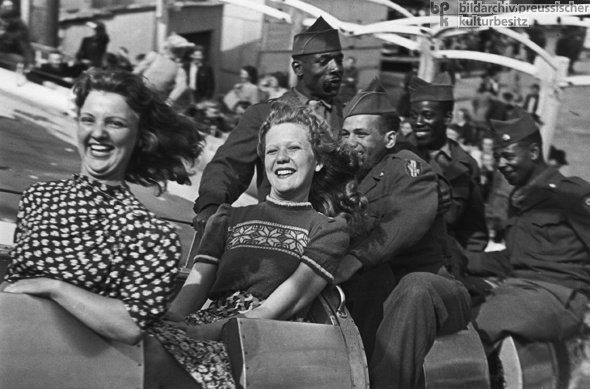
When NATO was established in 1949, the U.S. military was under pressure to adapt to new global realities, including its presence among European allies who had grown fond of and grateful to African-American soldiers during WWII.
The earlier Freeman Field Mutiny (1945) and the lived experiences of soldiers abroad laid groundwork for Executive Order 9981 — President Truman’s 1948 directive ending formal segregation in the U.S. Armed Forces. Many Black soldiers who stayed in Europe during the early NATO years served in the Occupation Forces and later NATO operations with hard-won dignity.
“Our boys were loved more in Europe than at home,” one veteran recalled. “Some never wanted to come back.”
🟣 Legacy Remembered Quietly
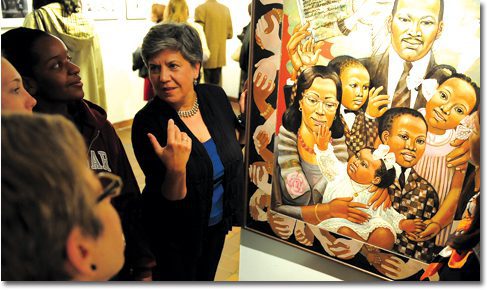
To this day, European towns still remember the Black soldiers who liberated them — even if official U.S. narratives have often been slow to highlight these stories. Interviews with elderly French, Belgian, Netherlands and German civilians continue to surface memories of African-American troops who shared meals, danced at village halls, and offered kindness amid the ruins of war.
These soldiers, whether in tank crews, truck convoys, or airfields, left behind more than victory — they left a human imprint still felt across Europe.
READ: Black Liberators during World War II
READ: A Breath of Freedom: African American GIs in Germany