
ROUTES’ Roots: Luther Robinson A.K.A. Mr. Bojangles | 12/1977
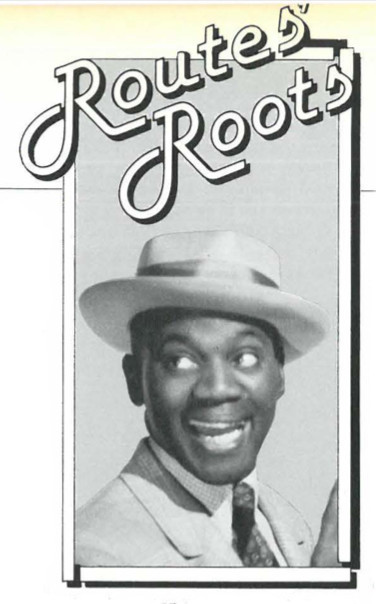 Born in Richmond, Virginia in 1878, as Luther Robinson, just thirteen years after the United States Congress passed the amendment to abolish slavery in America, William “Bill” Robinson began his journey to fame, and the road was not paved with gold, but sheer talent. As a child, his parents gave him what formal education was available, but his true passion was dance. Though his schooling did not include dance lessons, he danced anyway — he loved to dance and he always danced.
Beginnings of a Professional Career
At the age of eight, when other boys were still on the farm, Robinson ventured to Washington, DC, and worked in racing stables as an attendant and later as a jockey. All the while, he would dance after work in local beer gardens. During this time, he met Eddie Leonard, also from Richmond, and got a job in Eddie’s Revue for the Lawrence Hotel. It was here that his professional dance career began.
Rise to Fame
Luther Robinson was booked, in years to follow, at the Marigold Gardens in Chicago for two weeks and closed as the headliner two years later. By 1913 he had traveled cross-country and his reputation as a first-rate “clog hoofer” (tap dancer) was unquestioned. He introduced his Stair Step Dance, where he tapped out intricate routines up and down a staircase, which became one of his trademarks. His charm and rhythm captivated audiences, paving the way for his success.
Peak of His Career
His career reached one of its highest peaks in Lew Leslie’s Blackbirds in 1928 with music by Eubie Blake. Reviews of that time said “he danced his split toe wooden clogs like solo instruments.” This performance solidified his status as a dance icon. And then it was on to New York’s Palace Theatre where everything was copasetic, a term he coined and carried as his motto — meaning, everything was fine.
The Great Depression and Impact on Black Actors
Headlines that followed contradicted this term, at least for the rest of the world. The Great Depression of the 1930s hurled America into financial turmoil. Paradoxically, Black actors were experiencing an employment heyday in the booming movie industry. Despite societal challenges, Bill “Bojangles” Robinson was one of the best, excelling during these hard times.
Hollywood Success and Lasting Legacy
From his film debut in 1930 in Dihiana to Stormy Weather in 1943, Luther Robinson carried a cool, reserved gentleman-like demeanor that set him apart from his peers. His screen relationship with Shirley Temple will probably be his final claim to immortality by Hollywood, but he was a star before he met Miss Temple. His roles transcended racial stereotypes, setting a new benchmark.
Personal Life and Generosity
Luther Robinson was a man of much heart, not just for children. He did all that he could for fellow performers, including working their acts if they were sick and turning over the money to them. He was always known for his benevolence. Despite earning substantial amounts during his career, he ended up penniless due to poor financial management and a generous nature. His empathy was both his greatest strength and weakness.
Death and Legacy
Luther Robinson died penniless on November 25, 1950, of a heart attack, but friendless he was not. His friends gave him one of the largest funerals Harlem had ever seen. His influence remains profound, inspiring future generations. History can only deal gently with Bojangles — the man, the dancer, the actor, and the star. Through retrospect, we can all share in a copasetic moment because of Mr. Bojangles.