
Reverend Gardner C. Taylor: His Milestones and Achievements
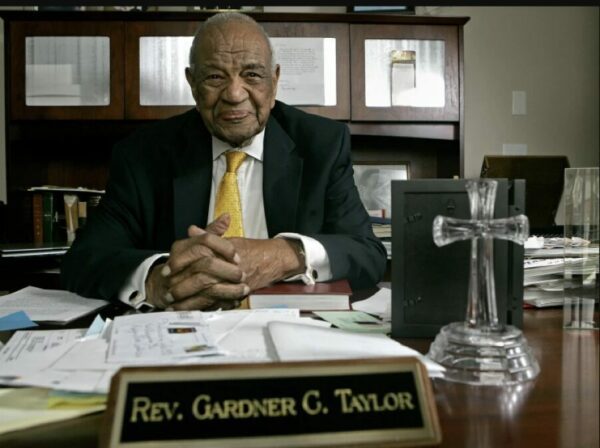
The “Dean of Black Preachers” was not a fancy title that just anyone could carry. It has only been borne by one man – Gardner C. Taylor. Standing as one of the greatest African American preachers in the United States, Gardner C. Taylor had his skin in the rough. While many would think that all preacher kids are sheltered, the boy who would become a preacher himself shared experiences of discrimination with fellow blacks of the 1900s. – even his grandparents were once enslaved.
As a good friend of Martin Luther King Jr, Gardner was a major source of religious inspiration for the Black community in the quest for freedom and equal rights. Born in Baton Rouge, Louisiana, in 1918, a time when racial segregation was intense, Gardner grew as a gentle voice against oppression. His preferred tool in the fight was “the pulpit.”
Although Gardner grew to be declared the greatest African American preacher by Ebony magazine in 1993, he wasn’t always a preacher. Though he was the son of a Baptist preacher, Gardner was mostly agnostic until he had a life-changing experience in a car accident. What could have been his death awakened him spiritually, and he began to pursue God more intentionally.
Shortly after his near-death experience in a car accident, Gardner enrolled in the Oberlin Graduate School of Theology in 1937. While in school, Gardner grew to be a fine Baptist preacher. He pastored the Bethany Baptist Church in Oberlin from 1938 to 1941.
During his time as a Baptist preacher, Gardner actively spoke about civil rights and social change to his congregation. As he wasn’t a preacher who shied away from the dark realities of African Americans, he drew the admiration and friendship of Dr. Martin Luther King Jr. He even drew support from the civil rights arm of the National Baptist Convention.
The Reverend Gardner C. Taylor and Martin Luther King Jr. Alliance
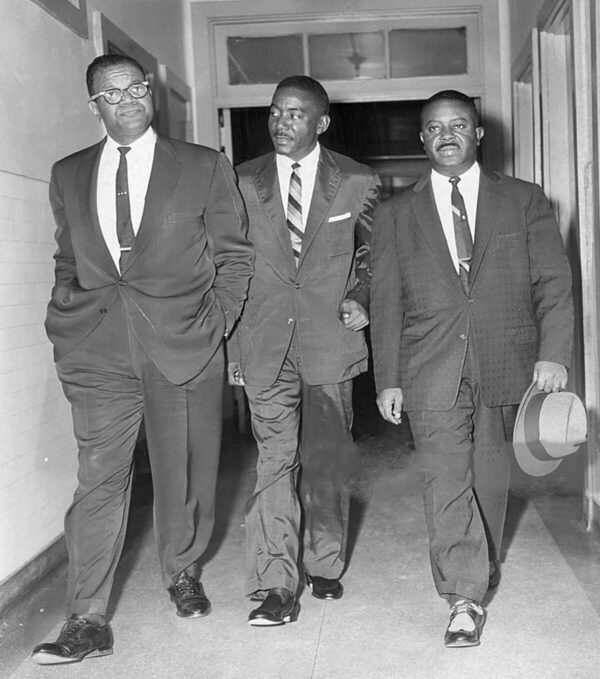
As a Baptist preacher who doubled as a vocal proponent for civil rights, it didn’t take long for Gardner to appear on the radar of King Jr. In fact, Gardner’s friendship with King Jr. began with the latter’s father, Martin Luther King Sr. The preacher soon became a regular face around King Jr. during his time at Concord Baptist Church, Bedford. Gardner played an active role in King Jr.’s civil rights campaigns, especially the Montgomery bus boycott of 1956.
Thanks to his oratory prowess and standing as a spiritual leader, Gardner helped draw more support for the civil rights movement. His speeches were instrumental in raising funds for the movement.
Departure from the NBC
As one of the foremost Baptist preachers of his time, Gardner was an active member of the National Baptist Convention (NBC). Although the NBC was committed to advocating for the rights of African Americans, Gardner had a different opinion about the stance of the NBC’s President – J.H Jackson.
Jackson, who served a long tenure from 1953 to 1982, had a passive stance concerning the civil rights movement, and that sparked a major disagreement with Gardner. The disagreement peaked in 1961 during the annual convention of the NBC. At the convention, Gardner challenged the passive stance of the incumbent President Jackson towards supporting the civil rights movement. In particular, Gardner noted that Jackson was one of the masterminds of the Chicago Democratic Machine, which actively worked against the civil rights movement and the efforts of Martin Luther King Jr.
In the heat of the disagreement, Gardner vied for the position of the president of NBC but lost to the well-established Jackson. Upon assuming victory, Jackson promptly removed King Jr. as the Vice President of the Sunday School and Baptist Training Union of the NBC. This ultimately led to the departure of King Jr., Gardner, and some others from the NBC.
Reverend Gardner C. Taylor Establishes the Progressive National Baptist Convention
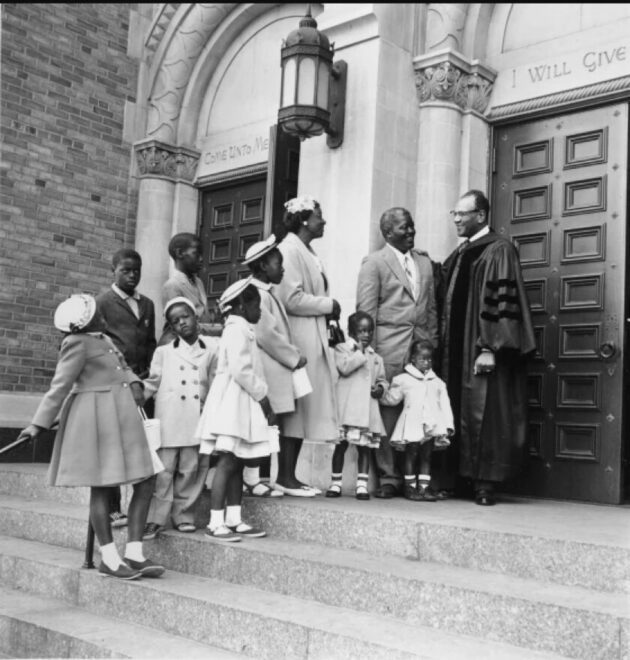
Gardner and King Jr.’s departure from the NBC morphed into the Progressive National Baptist Convention in November of 1961. It served as a solid backbone for non-violent civil rights campaigns such as the Southern Christian Leadership Conference (SCLC), the Student Non-violent Coordinating Committee (SNCC), and the Congress of Racial Equality (CORE).
Five years after its establishment, Gardner became the President of the PNBC and remained so until 1969.
The Dean of Black Preachers
For most of his life, Gardner C. Taylor was dedicated to preaching the gospel and advocating for the rights of all Blacks in the country. His impactful teachings and advocacy ultimately raised one of the largest Black churches in New York. Serving for 42 years at the Concord Baptist Church, Gardner was given the title “Dean of Black Preachers” as a testament to his theological prowess.
He was a preacher who was sound in theology and had a fine blend of technicality and realism. He typically engaged in the use of metaphors, rhythm, and stories to drive home sound theological points.
Despite his popularity, Gardner maintained a life of humility. As he once said, “I’m appreciative that people take notice of me, but when I go to worship, I’m not looking for that.”
Even in the most troubling moments with NBC, Gardner’s theological strength remained unfazed. Despite being summarily removed from NBC due to his alliance with King Jr., he still maintained relevance even among the circles of conservative preachers who did not see eye to eye with him on civil rights advocacy.
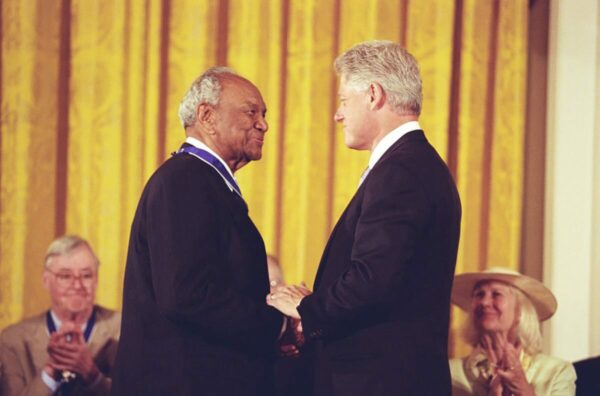
In recognition of his advocacy for the civil rights of African Americans, Gardner C. Taylor received the Presidential Medal of Freedom from President Bill Clinton in 2000.