
Lt. Henry O. Flipper: The Fight for Justice in a Military That Erased Him
Born into slavery but driven by brilliance and discipline, Lt. Henry O. Flipper became the first African American graduate of West Point. His military career was cut short by racial injustice, yet his fight for honor endured across generations — and still echoes today in the call for justice and restoration.
Week 1: Breaking Barriers in the 19th & Early 20th Century
Introduction:
In an era where the highest office in the land seeks to erase the language of diversity, equity, and inclusion from military institutions, it becomes even more critical to remember figures like Henry O. Flipper. His story is not just a historical account—it is a reminder of why we must never allow injustice to be sanitized from the record. As the first African-American graduate of West Point, Flipper’s perseverance in the face of systemic racism and his wrongful dismissal from the U.S. Army highlight the long and ongoing struggle for fairness in the armed forces.
The fight for inclusion in the military did not begin with modern policies—it has been fought on battlefields, in courtrooms, and through the lives of soldiers denied the honor they earned. More than a century ago, Flipper’s dismissal—rooted in discrimination rather than dishonor—became a stark example of how Black service members have had to navigate not just the perils of war but the entrenched prejudices of the military system itself.
Today, as some seek to dismantle conversations about racial equity in the armed forces, Flipper’s story stands as an unshakable truth: diversity is not a modern invention, nor is the fight for inclusion a mere political talking point. It is woven into the very fabric of military history, carried on the backs of those like Flipper, who endured humiliation and hardship for the right to serve.
The following account of Henry O. Flipper is more than a biography—it is an act of remembrance and resistance. It is proof that no decree can erase the long, painful, and ultimately triumphant struggle for justice within the U.S. military.
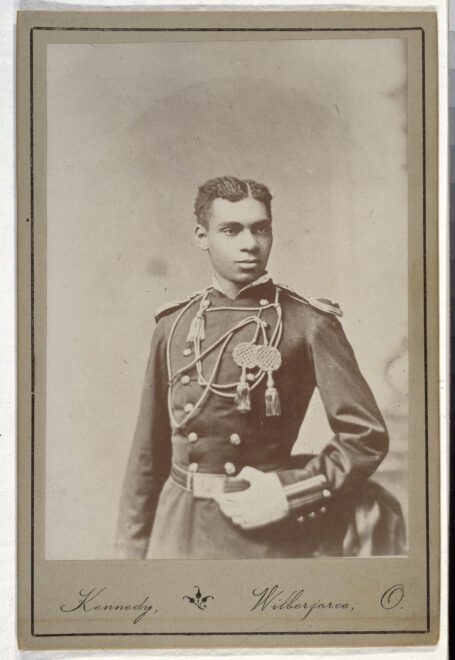
Prologue: A Court-Martial in Texas, 1882
The year is 1882. The place is Fort Davis, Texas. Twenty-six-year-old Lieutenant Henry O. Flipper stands tearful but proud before a United States general court-martial and hears himself condemned and dismissed by the United States Army for “conduct unbecoming an officer and gentleman.”
From Enslavement to West Point: Flipper’s Early Years
1865: African-Americans have just been freed from slavery. Nine-year-old Henry Flipper moves with his family from Thomasville, Georgia, to Atlanta. Having been tutored by other slaves and the wife of a former Confederate officer, he continues his education at a school conducted by the American Missionary Association before enrolling at Atlanta University.
1873: Congressman John C. Freeman of the Fifth District appoints Flipper to West Point. News of the appointment spreads, leading several prominent white Atlanta families to offer the Flipper family $5,000 if Henry refuses the nomination. The family declines. Henry interrupts his studies at Atlanta University and enters West Point.
A Lone Black Cadet: Surviving West Point
The four years Flipper spends at West Point are defined by isolation, hostility, and racism. He is a virtual outcast, enduring the type of abuse that African-Americans in the military would continue to experience for generations. But he perseveres.
In 1877, Cadet Henry O. Flipper graduates—the first African-American to do so. His very persecutors stand and cheer for him that day. He is assigned to the Tenth Cavalry at Fort Sill, one of two Black regular army cavalry regiments, and proves his worth as both a soldier and a leader.
Service and Sabotage: The Tenth Cavalry and Flipper’s Trial
1880: At Fort Davis, Texas, Flipper befriends Molly Dwyer, a young white woman. Their relationship—innocent or not—draws the ire of Colonel W.R. Shafter, Dwyer’s brother-in-law. Suddenly, Lieutenant Flipper finds himself accused of embezzling $791 in government funds. His accuser? Colonel Shafter himself.
The court-martial proceeds. Flipper is acquitted of embezzlement but convicted of “conduct unbecoming an officer and gentleman,” a vague and highly subjective charge. The real offense? Daring to be a Black officer in the U.S. military. The Army dismisses him.
Beyond the Army: A Life of Engineering and Advocacy

Despite the injustice, Flipper refuses to be defined by it. He becomes an engineer, working in Mexico as a surveyor of public lands while secretly serving as an agent for the U.S. Department of Justice. By 1910, he is recognized as an expert on Mexican affairs, advising the Senate Committee on Foreign Relations.
In 1923, he is appointed Assistant Advisor to the Secretary of the Interior. Later, he works for a Venezuelan oil company and retires in 1930 as a highly respected petroleum engineer.
Posthumous Justice: Clearing Flipper’s Name
1940: Henry O. Flipper dies in Atlanta, Georgia. His grave is unmarked. He spends his final years trying to remove the stain of his dishonorable discharge, but the Army never reinstates him.

1970: Ray MacColl, a white graduate student at Valdosta State College, reads about the Flipper case in a Black history course. He becomes obsessed with seeking justice for Flipper, compiling a legal brief challenging the irregularities of the trial.
1975: The U.S. Army posthumously exonerates Lieutenant Flipper and grants him an honorable military discharge. In 1976, West Point holds a ceremony in his honor.
1999: President Bill Clinton grants Flipper a full presidential pardon, erasing the last traces of official condemnation.

2013: The U.S. military places a memorial marker for Flipper at Arlington National Cemetery, recognizing him among the nation’s honored service members.
Epilogue: Why Flipper’s Story Still Matters Today
Today, as discussions of diversity, equity, and inclusion in the military come under attack, Henry O. Flipper’s story is more relevant than ever. His case reminds us that the fight for justice in the armed forces is not new—it is an ongoing battle waged by those who refused to be erased.
No executive order can change the truth of Flipper’s struggle or the long history of racial discrimination within the U.S. military. His story is a testament to resilience, perseverance, and the power of history to correct injustice.
The lesson of Lieutenant Henry O. Flipper is clear: Erasing diversity from the narrative does not erase the reality.
WATCH: Henry O Flipper: The 1st Black West Point Graduate
AfricanAmericanValorSeries #RoutesMagazine #BlackMilitaryHistory #MilitaryHeroes #WWI #WWII #CivilRights #BlackExcellence #USMilitaryHistory #UntoldStories #BlackHistory365
Lieutenant Colonel William Rufus Shafter 1st US Infantry Regiment was Not Mollie Dwyer’s Brother in Law. Captain Nicholas Nolan Troop A 10th US Cavalry Regiment married her Sister Annie Dwyer. He was 2nd Lieutenant Henry Ossian Flipper Commanding Officer of Troop A. The missing funds in the amount of $3,791.07 were stolen by 1st Lieutenants Charles Nordstrom 10th Cavalry Regiment and Louis Wilhelmi 1st Infantry Regiment to frame Lieutenant Flipper with LTC Shafter subtle acknowledgement. The stolen funds were later used to buy land sections by LTC Shafter and 1st LT. Wilhelmi for a mining rights to what become the mining town of Shafter, Texas. 1st Lieutenant Nordstrom married Mollie Dwyer and they had 2 daughters Frances and Marie Nordstrom.