
Raven Chanticleer and the Harlem African-American Wax Museum
This article has two parts:
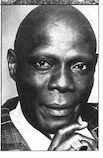
Part I is my reminiscence of visiting the Harlem African-American Wax Museum, and, my experience meeting Raven Chanticleer. Before visiting the wax museum, I remember accidentally meeting Raven Chanticleer in Chelsea. His comportment was everything you might expect from his pretentious name, Raven Chanticleer. He was someone, who once you’ve met him, you’d never forgot him.
Part II is “Whatever Happened to Raven Chanticleer and the African-American Wax Museum of Harlem.”
Part I.
In a sleepy neighborhood at the other end of town stands Raven Chanticleer’s African-American Wax Museum of Harlem (316 W. 115th St.), one of the few truly extraordinary cultural experiences to be found in the Big Apple.
Proprietor-curator-director-artist-tour guide-museum guard Raven Chanticleer lends the museum the air of the eccentric novelty museums that populated small-town America in the days of your. But he and his museum could be found only in New York.
The cozy gallery, with its wood floors and raffia-lined walls, is filled to capacity with Ravens handiwork, beginning with a folding chair built for the 1942 Worlds Fair and continuing through a wax work Mandela unveil last year. Along the way you’ll find an encyclopedia of painting styles, ranging from two-tone portraits of historic people to seascapes.
Add to that a colorful series of New Testament scenes, spritely paintings from African-American history, a portrait of Beethoven accentuating the composer’s African ancestry and an array of wood carvings. And that’s just the half of it. For the heart of the museum is in its wax figures ” Malcolm X, Adam Clayton Powell, Martin Luther King, Jr., Nelson Mandela, Josephine Baker, David Dinkins and others ” all made from a “secret formula” which no torture or reward could ever persuade the artist to reveal. The result is New York’s only wax museum for African-American figures, and as far as we know, New York’s only wax museum of any kind. Now we can truly say that New York has everything.
Still it is a little difficult to speak of the museum without speaking of Raven himself. On most days he can be found herding busloads of students around the place, grandly lecturing and never letting the little ones unsettled his imperial demeanor. And he gives the tour to all visitors; Raven’s running monologue is something you don’t want to miss. But while the museum is open from 1:00 pm: to 6:00 pm, Tuesday through Saturday, be sure to call first for an appointment (212) 678-7818.
Part II
“Whatever happened to “Raven Chanticleer and the Harlem African-American Wax Museum.”
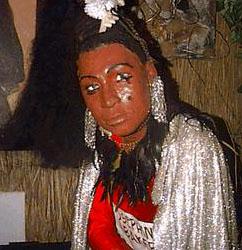
The African-American Wax Museum of Harlem was a unique cultural institution located at 316 West 115th Street, Harlem. The museum was established by Raven Chanticleer (née James Watson), a multi-talented artist born to a family with roots in Barbados and Haiti. Chanticleer, who lived next door to the museum with his wife, dedicated his life to creating wax figures that commemorated significant African-American figures.
Raven Chanticleer: The Founder
Raven Chanticleer (was an artist of many talents, including fashion design, dance, and sculpture. Born to a prominent family, Chanticleer’s mother was from Barbados and his father from Haiti. He had a sister and a brother, the latter born in Haiti where his father worked as a principal.
Chanticleer was inspired to create a wax museum after visiting Madame Tussaud’s in London and noticing the lack of representation of black figures. This spurred him to establish a museum that would fill this void, culminating in the opening of the African-American Wax Museum of Harlem in 1988.
The Harlem African-American Wax Museum
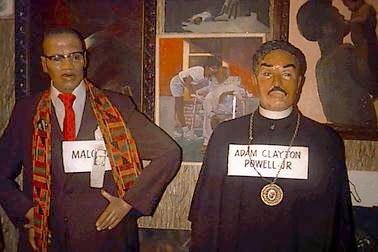
The museum featured life-sized wax figures of notable African-American historical figures. Chanticleer’s process of creating these figures involved using materials such as paper mache and plaster, and each figure took about a month to complete. Some of the notable figures in the museum included David Dinkins, New York City’s first African-American mayor, and Dr. Martin Luther King Jr.
Chanticleer’s dream was to expand the museum and include a computer room, and at the time of his passing in 2002, he was working on a figure of Bob Marley.
Cultural Impact
Aside from running the museum, Raven Chanticleer was a writer and educator. He wrote for a newspaper and had formerly taught at a college before focusing on teaching younger students. He was also working on a book titled “Taking Wax to the Max” to share his experiences and the history of the museum.
After Raven Chanticleer’s Death
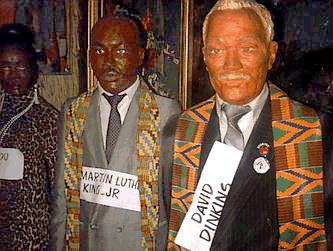
Raven Chanticleer passed away in 2002 due to lung cancer. After his death, the future of the African-American Wax Museum of Harlem became uncertain. Initially, it was believed that the wax figures and other artifacts had been lost or destroyed when the property was sold. However, some items were eventually recovered.
In 2015, four remaining wax statues and a few paintings were safely stored away, thanks to the efforts of local community members and art enthusiasts.
Role of His Family
Chanticleer’s family played a crucial role in preserving his legacy, although they faced significant challenges. It was reported that Mr. Chanticleer, who was openly gay, did not have the support of many close to him after his death, which complicated efforts to preserve the museum.
Current Status of the Harlem African-American Wax Museum
While a permanent home for the museum’s collection was sought, many uptown institutions did not want to feature or take responsibility for the small collection. Fortunately, the downtown LGBT Leslie Lohman Gallery took in a couple of the iconic figures. The search for a permanent home for the remaining works continues, and any interested parties are encouraged to contact local preservationists.
For more information and updates about the museum, you can visit the Harlem African American Wax Museum website.
Raven Chanticleer,
I’m Christopher Trujillo I am the one who unearthed, restored and donated the only remaining wax figures under my name to the Leslie Lohan Museum located in SoHo Manhattan NYC .
I still have the original street sign welcoming patrons.
It was painstaking work and a complete gift for me to do so.