
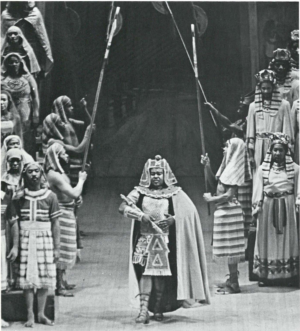
Have you ever wondered if there would come a day when we would look forward to seeing and hearing an all Black Opera. I mean, an opera written by a Black composer, sung by Black artists, staffed by Black Musicians, conducted by a Black maestro and marketed by Black marketers. Well, wonder no more. On December 3, 1977, Opera Ebony will perform for the first time in New York City at the Beacon Theater. ROUTES wanted to take look at the inner workings of Opera Ebony. What is it really? Who are the people involved? We met with the man, Benjamin Matthews, who dreamt about it all and the one who has taken the time to put it all together. In an interview with Benjamin Matthews, a very successful Bass-baritone himself, we learned just what December 3, 1977 will mean to New York City.
ROUTES: Mr. Benjamin Matthews, tell us about yourself?
Matthews: Well, I’m a singer. Right now, I’m primarily singing in operas and symphony concerts. I began my career performing in recital works, then oratorios and now opera.
ROUTES: When and where did you start singing?
Matthews: I started in 1958, in Chicago. Nineteen years ago I had my first voice lesson. And, nine years ago I went off to Europe for my very first concert tour. When I returned from Europe, I thought I would stop in New York for a few days to see what was going on — the few days have lasted ten years. I’ve been here for ten years now and it’s here that I’ve really learned what it means to be a professional singer. I’ve learned what it means to be prepared. New York teaches you to know when you are and when you are not prepared. It’s the place to get prepared. I call it the Mecca. Everything is here.
But they came to New York to lure me back to Chicago, not that I was that much better when I went back.
ROUTES: Who are they?
Matthews: The Chicago Symphony, the Grant Park’s Summer Concerts, television stations. I went back for a recital. I entered a big competition and won it. Then I sang with the Chicago Symphony. I did some things for NBC television. This was after I had been gone for about four or five years. They came and they heard me. I did all of the intermediate things that a singer would do in Chicago. But you have to move to prove that you can do bigger and better things. And then they will bring you back.
ROUTES: What experiences did you have in Europe?

Matthews: Hamburg was my first trip. Then I was off to Berlin, Vienna, and Frankfurt. I did recitals in those cities. I’ve made about 5 trips to Europe since. I’ve been to Holland, Sweden and Austria to sing with the national Opera companies. I go back next year to sing in Stockholm, Sweden again, then off to Copenhagen, Milan and Rome. I’m off to Poland for some studio recordings. Someone, now, is working on a State Department Tour of Russia for me. It seems as though I’m on my way.
ROUTES: How did you get interested in opera?
Matthews: Nineteen years ago Blacks in opera were basically unheard of. My first teacher recommended that I stay away from opera. She tried to discourage me. She said, “Don’t sing opera. If you ever sing opera, sing after you are thirty years old. It’s too hard on your voice.” Well, I thought she was crazy.
During one of my first lessons, she looked at me and said, “So you want to be a singer, huh?” I said, “Yes, I do.” She said, “It’s going to take you ten years… .” I repeated TEN YEARS!” “Yes,” she said— “That’s not long a long time.” Nine years later I began my professional career — she almost nailed it to the year,
ROUTES: Why are Blacks experiencing difficulties getting into classical music?
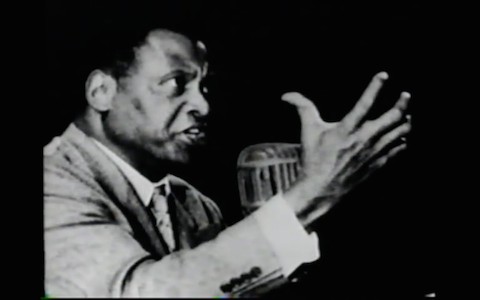
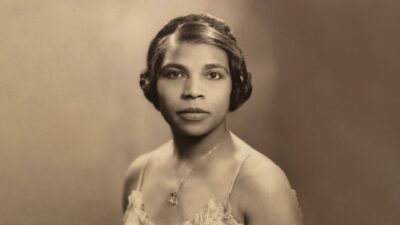
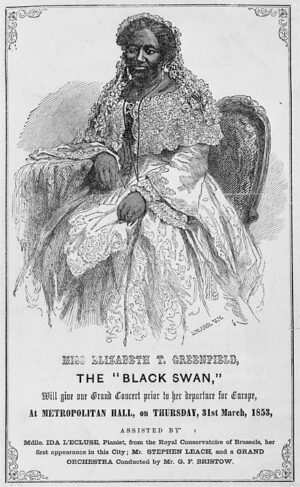
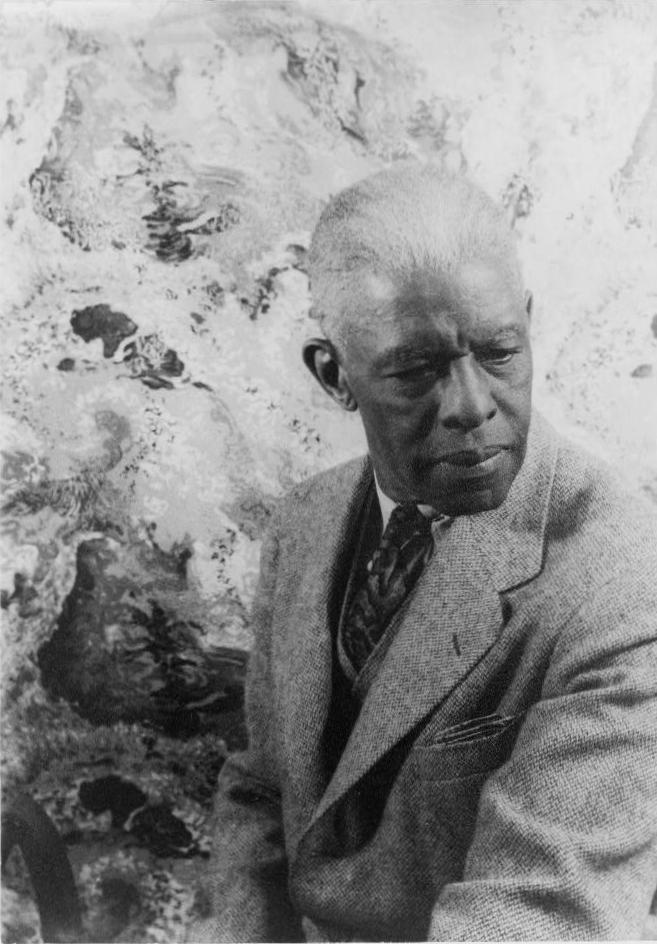
Matthews: It is very interesting that twenty, thirty or forty years ago, there were singers Marian Anderson Paul Robeson, Roland Hayes, Elizabeth Greenfield and so many other wonderful singers … . The interesting thing is that these singers found it difficult being accepted by the White establishment. But, they had a Black audience. They had an advantage that we do not have today. When they couldn’t sing for the White folks, they’d sing for the Black folks. Then, Black people had pride in the arts. They had pride in our culture.
The church has always been the seat of culture and the church became the recital hall. You don’t find them bringing our great artists into the churches now. They bring many of our intermediate artists to the churches. The churches were Paul Robeson’s recital halls. When the White folks didn’t want to hear them, the Black folks wanted to hear them. When the White folks didn’t want to hear Marian Anderson, the Black folks wanted to hear her. When she travelled throughout the South and wasn’t accepted in concert halls, her concerts were performed in churches. The critics came to the churches — and the Black people filled up the churches. So they had an audience.
Interestingly enough, when I think about the impact of singers today, I keep remembering the singers of the past. I wonder how many of today’s singers could fill a hall with only Black people? And, in our progress, I wonder, sometimes, about how much we’ve intellectually progressed, and, has it really affected us culturally? Has it given to us or has it taken from us.
Twenty-five years ago, you could have asked any person, twelve or fifteen years old, if they had heard of Marian Anderson. I first heard of Marian Anderson when I was five. Educators began teaching me about Marian Anderson in the schools. Pictures were hung up. I knew of Roland Hayes when I was twelve. I knew of Dorothy Maynor and a couple of singers around our town. When a singer was coming to town who was assumed to be an opera singer, the house was sold out. We would go and we would hear this or that lieder. This was in Alabama, Mobile, Alabama! This is how it was throughout the South.
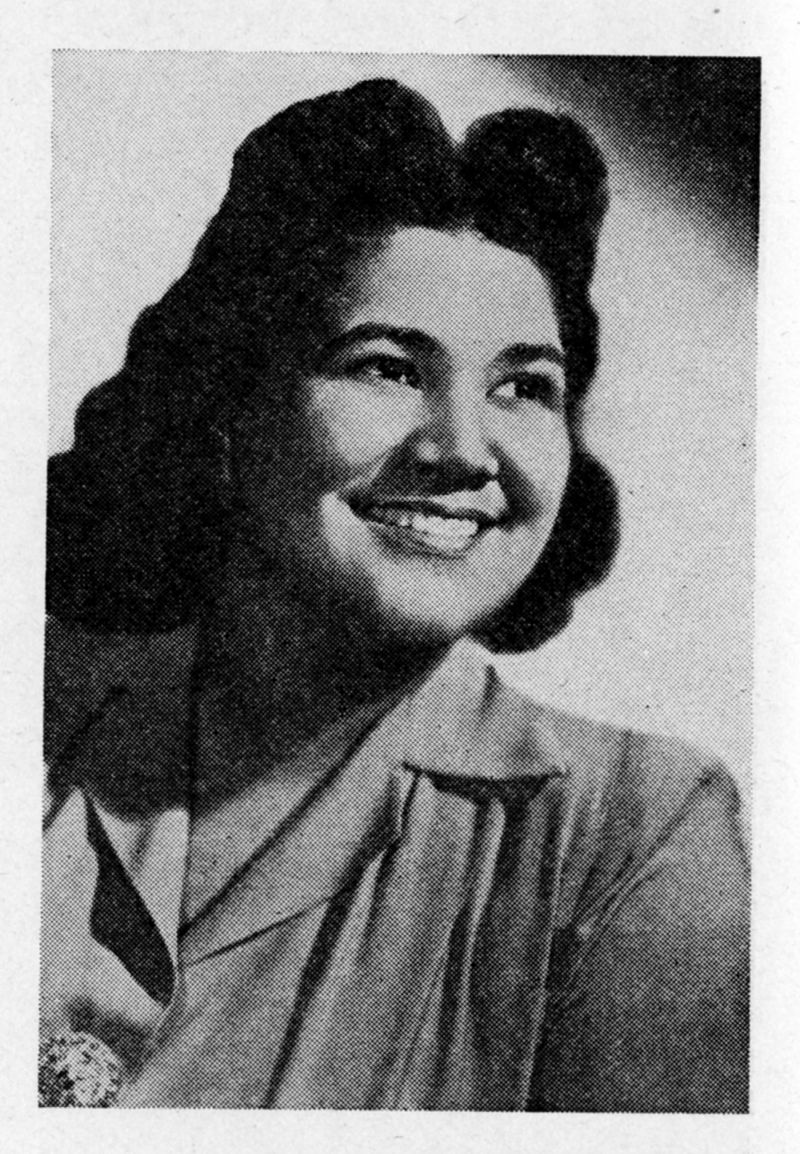
When I go to Mobile, now, there’s a big audience. But hit some of the smaller cities or metropolises — ask twelve or fifteen year olds “Who is Shirley Verrett?” Without a doubt, they’ll respond “I don’t know.” — they have no audience. The younger ones might know who Leontyne Price is. Many of them might know Marian Anderson. But ask them about Paul Robeson or Roland Hayes and they’ll be at a complete loss. When I was coming up, we knew about them at six or seven years of age. And we wanted to hear them. We wanted to be a part of it. Marian Anderson had to, in some places, give two to three concerts a year because the venues available could not accommodate her audience. Who, of today’s Black artists, could fill Carnegie Hall three times a year? Leontyne Price is probably the only one. Who, of our artists, could fill up Avery Fisher Hall with an all Black audience?
ROUTES: (Mr. Matthews’s commanding robust voice booms with such a captivating force that we were entranced). Now tell us about Opera Ebony.
Matthews: It’s my pet. It’s like my baby. It’s like a mother with a bad child. At times, it drives me almost crazy. While other times it makes me very very happy. When there is a production, and we come out of it with great success. And wonderful things are going-on on stage. Everything is fine. But when it comes to the business of it — confronting people and trying to get support; trying to raise money; and trying to get foundations to support us, — it is extremely difficult and agonizing. Because I believe in Opera Ebony. I don’t believe Opera Ebony was formed. Opera Ebony was created. Created out of problems.
ROUTES: What problems in particular are you referring to?
Matthews: Racism! Racism perpetuated by opera companies.
When I am looked at or listened to, I am not looked at or listened to as an opera singer. My color comes first and my voice comes second. Being a Black man, I have it three times as difficult as a Black woman. For instance, there are about six or eight Black women who debut, within the past 16 or 17 months, at the Metropolitan Opera House. Since Mr. Levine took over. And, not one Black man has debut in that house, not one. Now if there is one company which really is the most opened company, I would say it’s the New York City Opera Company. Say what you will, I was there. I wasn’t particularly happy with what I sang, but I was there.
ROUTES: Why were you unhappy?
Matthews: Well, I was an understudy. And, being an understudy in Faust, I was in excellent voice but didn’t have the opportunity to use it. There I was, a wonderful artist, watching another wonderful artist. Doing so did more to destroy me than to help me. I traveled to Philadelphia and sang the role and got rave reviews. So, being in the wings did not help me. I had to get out. I had to remove myself. It was destroying my spirituality. It was destroying my emotional stability. I did not need to surround myself with that. Now a lot of people thought it was a marvelous opportunity and would not understand my not wanting to be an artist on that particular level. But I understand it. Probably, the reason I’m having the success that I’m having when I do sing, is because I understand it. It took some time to place a value on myself. I withdrew to find myself. When I step on stage, I have no fear. I know I’m good and I know my own spirituality. I am emotionally ready and I feel good.
ROUTES: This spirituality that you speak of, do you find it with Opera Ebony?

Matthews: Well, I have to apply much of this. I do in many aspects. You see, people support us with ticket sales. Foundations could help support us with dollars. But, Foundations throw our materials in the garbage, or they won’t respond. But, my spirituality is not dullen. I continue to exist because I believe in Opera Ebony.
Let me give you an example. I had written a letter to American Express and along with it included my proposal. I gave them a three year projection, 1977-1979. And I named all of the operas that we planned to produce in New York City. They wrote me back saying that they were concentrating only on projects in this area. And that they were putting their money into things that were being done in New York City. Now if they had read my materials, they would have known that we had planned to do these things in New York City. I said to myself, “I am not going to let them get away with this.” So, I wrote them back stating that my materials are clearly marked for New York City production. I never heard from them again. They didn’t tell me that they didn’t have any money. They just didn’t respond.
I must have contacted 150 foundations and about — 40 did not reply at all. The rest were all negative replies except for one. And that one was The Jerome Foundation in St. Paul, Minnesota. They gave us $10,000 to help us get started. Not a single New York foundation has given us a cent. And there is money here. This is the foundation capital of the world. And all of them give the same old line — and that’s discouraging. They have money when buildings are burning and there are lootings and killings. They will respond to those circumstances. They will respond to programs that quiet things down. And as things quiet down, they begin to gradually withhold money until there are more problems.
This is a peaceful time now. Most people are staying at home or busying themselves with other things and are not taking an interest. Culture refines the personality. And only when they see the lack of culture are they concerned about getting culture to Black people. When they see the lack of it or when the lack of it is in focus, then they respond because they can see that they have no refinement. Because, refined people don’t loot or steal or rob. They have a more purified mind because they are exposed to better things. The mind, to cultivate it, means people are innovative and are elevated above those things that are low. Now something like Opera Ebony can pull a lot of people up. It gives them a different outlook and a lot of our young people need it, and will take it if it is presented to them. Most of our artists are not in Harlem or living in the slums. They don’t see them. Everybody I know wants to get out of the slums. So, consequently we are on the move. Opera Ebony goes back in there to get them. We go to the churches and give it to them. We have a wonderful crowd at Abyssinian Baptist Church. We performed there and they gave us $1,500 in support.
ROUTES: Why do you feel Opera Ebony will succeed?
Matthews: Opera Ebony is unique. There is nothing to compete with it. It’s a Black Opera Company being run by Black people that’s putting Black people on stage, getting Black musicians to play in the orchestra. I insist upon them being Black. I cannot accept an all white orchestra. The Metropolitan and New York City Opera companies have not a single Black player in the pit. I couldn’t have an orchestra like that for Opera Ebony.
ROUTES: Do you teach as well as sing?
Matthews: Yes I do. I want to share my experiences with the young talent who can benefit from them. I tell my students, “Get your heads together. Know who you are, what you are about and open your mouth and sing. Until you get that, you’re not going to sing. As long as the brain is scattered your technique is going to be scattered too. Get in tune with your inner being.”
ROUTES: How many people make up the company?
Matthews: We have six administrators. Philadelphia Committee has about 30 volunteers and New York has about 10 working volunteers. So, what we have, is a new opera company, bringing a new opera into New York City.
ROUTES: What is the new opera?
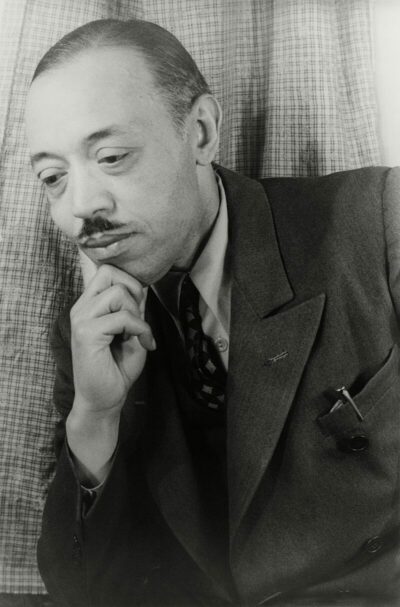
Matthews: We will be premiering William Grant Still‘s Opera in one act, Highway One, USA. Highway One is a one act opera and lasts about one hour and fifteen minutes. But to extend the evening, we are playing William Grant Still’s Symphony No. 1, The Afro American Suite. That will be the prelude to the opera and with a break for about ten minutes, it is going to be an exciting evening. The perfect length, one hour and forty-five minutes. It will be performed in English with wonderful singers and lots of beautiful things happening on stage. This will be our first production that we brought from scratch. The others, we rented costumes and sets. Everything you see in this one will be Opera Ebony.
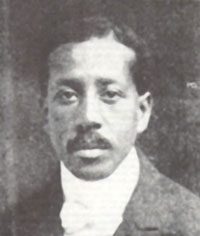
I am so excited. Can you imagine a Black woman conducting a Black Opera? I was asked by someone the other day, “You mean you are doing an opera written by a Black composer?” “Yes,” I said. He replied “I didn’t know Blacks were interested in opera,” I said, well this composer wrote seven. There is another, Harry Lawrence Freeman. He wrote eighteen out there in Brooklyn. His son’s wife has them. She has all of his works. I understand they’re all locked up in trunks. I called her to ask her about examining some of them in order to see the possibility of using some of them. She said, “Well, someone is coming to catalogue them for me. Everybody is after them, we’ll see.” So they’re still out there in those trunks. Now, all she needs is one fire or one flood that’ll destroy them. She doesn’t realize their value.
ROUTES: Is there anything else you would like to share with our readers?
Matthews: My spirituality could go on and on and I am afraid that ROUTES would not have the space to cover all of what I have to say to the world. Please support Opera Ebony in New York City. Come out to the Beacon Theater on December 3rd and experience a wonderful evening of music. We have a marvelous cast and we look forward to this historical occasion.
Opera Ebony broke boundaries in classical music for 50 years — but what comes next?