
Oscar Peterson — a unique joyful masterful jazz pianist
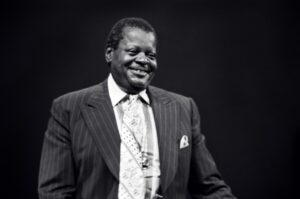
Oscar Peterson, a luminary in the world of jazz, was a Canadian pianist and composer. He was born, August 15, 1925, in Montreal Quebec. His diverse musical influences ranged from classical to jazz. This unique and innovative approach to jazz led to his recognition as “King of Inside Swing.” This title sums up neatly his distinctive ability to blend intricate melodies with rhythmic sophistication.
Oscar’s playing style was characterized by rapid-fire runs and complex harmonies. It was Often accompanied by a swinging rhythm that made his performances exhilarating. Meticulous practice and dedication to his craft led to the development of a signature sound. That sound combined elements of bebop with blues influences. This distinctiveness set him apart in an era marked by significant developments in jazz music.
Throughout his prolific career Oscar Peterson released over 200 recordings. Throughout his lifetime the plaudits were numerous:
-
- won a JUNO Award and 8 Grammy Awards, one for lifetime achievement.
- inducted into the Canadian Music Hall of Fame.
- inducted into the International Jazz Hall of Fame.
- first recipient of the Governor General’s Performing Arts Award for Lifetime Achievement.
- appointed Officer, then Companion of the Order of Canada.
- appointed Officer in the Order of Arts and Letters in France.
These testaments are witnesses to his artistic ingenuity and commercial appeal. His recordings include collaborations with some of the most revered names in jazz music history. They include Ella Fitzgerald, Louis Armstrong and Joe Williams.
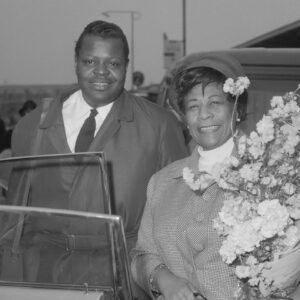
The recordings made during these partnerships exemplify seamless blending of unique vocal artistry with Peterson’s masterful piano accompaniment. For instance, the collaborative album “Ella and Oscar” is often praised for its artistic depth and technical mastery. It illustrates how collaboration can elevate individual performances into something sublime.
In addition to vocalists, Peterson’s discography includes significant collaborations with fellow instrumentalists, Ray Brown, bassist and Herb Ellis, guitarist. These partnerships resulted in numerous recordings that emphasize tight rhythmic cohesion and harmonic exploration. The synergy among these musicians demonstrates the importance of collaboration in jazz music. Improvisation thrives on mutual understanding and shared creative vision. Thus, Oscar Peterson’s recordings serve not only as testament to his extraordinary talent, but also as an illustration of how collaborative efforts can produce some of the most memorable moments in jazz history.
These collaborations not only highlighted Peterson’s versatility as an artist, but also contributed significantly to the evolution of jazz during the mid-20th century.
Now, to round out how Oscar Peterson pushed creativity — his piano had 97 keys, not the usual 88. The extra keys were a metaphor for his musical inventiveness. (The piano was based on an Austrian model that he favored.)
Despite facing numerous challenges throughout his life — including overcoming racial discrimination and health issues — Oscar Peterson remained committed to sharing a musical vision with the world. His resilience is exemplified through his performances. It is also evident in his educational initiatives aimed at nurturing young talent within Canada and beyond. By establishing scholarships and mentoring programs for aspiring musicians, he ensured that future generations would have opportunities similar to those he had once pursued.
Oscar Peterson passed away on December 23, 2007. His extraordinary talent earned him the reverent title of “Maharaja of the Keyboard” from one of his illustrious peers, Duke Ellington.